The last description in this series is Collaborator or Co-creator. These two descriptions capture mission as a joint work together between missionary and locals, as equals, where both parties play a role. Although technically not a picture, the overall sense of both of these is in the combining of two parties in partnership towards one goal. And while I’m not technically a linguist, it seems to me that the term collaborator gives the sense of labouring together.
A further aspect of these descriptions is the feature of both parties bringing expertise to the table in order to make something new. In this way, both parties are essential and neither is enough on their own. This resonates when I think about teaching theology; I’m trying to bring theological ideas through English to Khmer. My theological ideas are not enough on their own and neither is Khmer enough on its own. But in the combination, there is a synergy in the process of coming together. Co-creator builds on this coming-together aspect but also points to the creative aspects of partnerships, a creativity that mirrors the Creator. Something new is created as we wrestle with theology from English to Khmer.
This is the third installment in a series that we hope helps convey some of the basics of life in Cambodia. If you missed the first and second one, they are here and here.
Jenny: The traffic in PP is pretty crazy. How do you get around?
Sam: Yes, it is crazy. In our first 3 years here I only used tuktuks, and Craig rode a bicycle. In 2021 I felt ready to drive here, so CMS helped us to buy a car, a 20 year old Honda CRV. Learning to drive on the other side of the road, on the other side of the car, was a challenge. I have put on the wipers instead of the indicator more times than I can count! That’s nothing compared to the challenge of the complicated road situation. There are so many motorbikes, trucks, tuktuks and other random vehicles all moving around each other. The give way “rules” seem to be the opposite of those in Australia. I am not ready to drive on the highways, though Craig has. Overtaking here is frightening, and there are bicycles, motorbikes and tuktuks all travelling on the sides of the road, in both directions. I had my first accident in my first week of driving when a motorbike, with driver and passenger, crashed into my driver’s side door. I had my second accident a few weeks later when a motorbike ran into Hannah’s passenger side door. Thankfully no one was hurt. This year CMS helped Craig to buy a new motorbike. He rides everywhere now and it’s very convenient for him. For more thoughts on driving in Cambodia, see here.
Jenny: It’s quite hard to walk to places in PP. Why do you think that is?
Sam: The “footpaths” here are designed as a driveway for motorbikes to access shop fronts in each house or building, rather than as a place for pedestrians to walk around. Most people have a moto, so they get around on the roads, even if they are travelling a short distance. Having said that, any time that I need to walk on the roads to get somewhere, or cross the street, I feel much safer doing so here because the traffic is much slower, and Cambodian drivers seem more aware of their surrounding and to expect the unexpected. The heat and humidity also is a huge negative factor in not walking anywhere. Who wants to arrive somewhere in a ball of sweat?
I used the photo above in our first year in Cambodia, here, in a blog series about settling in to a new country. It was meant to illustrate all the decisions that missionaries need to make when they first arrive. It was part of a time when I was working out Cambodia as a place. Growing in my knowledge of Cambodia as a place also means growing in my knowledge of my place in Cambodia. That is, part of getting to know a location is knowing our place in that location. This series is about that; our place in this location, Cambodia.
Over the years I have been toying with different descriptions that capture our experience as missionaries here. Some of these, like the Bridge description, here, I have been fiddling with since before we even arrived in Cambodia. Others I have found helpful as I reflect on being on location, here. Hopefully they provide helpful insights into our experience crossing cultures in ministry. In sharing them I seek to both further consolidate my thinking on these mission images, while at the same time providing a sense of what we do and why we do it this way. Hope you find these helpful. Would love to hear your thoughts and create some interaction around these pictures of mission.
Our home assignment in 2020 had two unexpected challenges. Home assignment is hard enough without extra challenges (that’s why we call it an assignment, it’s not a holiday). Both these challenges related to COVID and they both involved waiting. COVID made life hard in general, this included our church visits in the first half of 2020. We went from meeting in person to meeting online in a split second. Talk about whiplash. Then came the difficult news when our June flights to Cambodia were canceled.
Our first challenge was how to proceed. With the help of CMS we came to the plan of staying in Australia for the rest of 2020. This gave our family stability amongst a lot of unknowns, especially that our children could finish the academic year in Australia. We were in a season of waiting and while it was hard to wait, there was harder to come.
This harder news came at the end of 2020 in December. Our next challenge was that our visa wasn’t approved, so we had to cancel our January flights to Cambodia. That was rough. What was rougher was the unknown-ness of this second challenge. When flights were canceled the first time, we set a time to return. With visa uncertainty, would we ever get back to Cambodia? We were well aware that this has been the experience of some missionaries.
What I want to reflect on is that month of waiting and not knowing (late Dec until early Feb) was harder than the six months previously when we had set an arbitrary date to return. We were waiting and knowing. Waiting with knowledge is much easier than waiting without knowing. This is very much akin to Christian hope. We aren’t hopeful, as in whether we hope it will rain or not. We’re hopeful with more certainty. We’re certain of God’s love for us in Jesus Christ’s death and resurrection. We’re certain of Jesus’ promised return. Hope is waiting with knowing and that actually makes things easier than waiting and not knowing.
It’s been a while. Apart from our latest post, the post before that was one we did from Australia in 2020, before we knew our flights would be canceled, again. So what has been happening since then? This next series catches you up, not only on some of the details of our goings-on, but also adds in new cultural and missiological insights that we’ve picked up along the way. For those who receive our monthly updates, the beginning of this series will be a helpful reminder of our journey in recent years giving good context to where we are up to as well as going into details that we can’t always fit in our monthly updates. Hope you enjoy the ride.
Part of our decision to stay in Australia till January rather than attempt to return earlier was to prepare ourselves for the long term in Cambodia, in view of the disruption that COVID has been. Part of our rationale was giving our family stability for a little bit. During that time of stability we (Sam and I) were able to use that time to ‘grow ourselves up’ (the title from a book by Jenny Brown that we both love) or more specifically, work on ourselves in different ways.
The result of that working was that during the Term 3 holidays I reflected that I was ready to return. We were both rested and had grown in self-awareness. Both of these will help us as we start back in our second time around in Cambodia, and help us stay in the long term. Below are some of the things we’ve done and the way we’ve found them helpful.
Resilience insights: I was involved in a resilience training study. It was helpful to see that we can grow in resilience and that we often rely on previous forms of resilience that may or may not be helpful in new situations. I was able to see that resilience is related to our beliefs, practices and resources. For me it was particularly this third category, in how I spent my time and energy that provided me with insights about how best to grow my resilience. In the past I would normally just try and rise to the task (when massive things came along). While that’s needed in some ways, now I need to work much smarter as mission and family life mean that I can’t just up-my game, because I have been maxing out.
Marriage enrichment: Sam and I were enabled to participate in the Condie online marriage enrichment course (we’ve been able to be a part of their in person seminars twice before). This was helpful for us both, particularly in the very ordinary but profound insight of doing little things every day as the way to grow a marriage. Grand gestures are fine, but it’s about cultivating friendship and gentleness and staying connected with each other (particularly in stressful times like this year or when living in other cultures).
Family systems: I first came across Bowen’s Family System thinking at Moore college about 10 years ago. Since then I’ve dabbled a little (see the book I mentioned above). During this period we were able to put these insights to greater use as we delved into some situations more particularly with the help of a Family Systems counsellor. We picked up insights about how we function individually, but more importantly how our family functions as one ’emotional unit’. To quote Dr Robert Creech, from an online conference that I was enabled to participate in, the aim is to be the calmest person in the room. Now, while we can’t always be calm, the result of working on ourselves and our responses has effects on the units we are a part of (our families, staff teams or similar). In understanding ourselves more we can reduce the emotion that inevitably gets passed around in the groups we inhabit.
Those are just a taster of the insights we’ve gained from this time. These insights will set us up, not just for the long term in Cambodia, but the long term in life.
This post rounds off the series. Hope you’ve found it helpful. For me it provides a place for my consolidated thoughts, if I want to access them later. And in consolidating I’ve learnt and been reminded of a great many things that I have learnt already. It’ll be interesting to see what the next blog post series is from our second term in Cambodia.
This post is about our experience of being delayed in returning to Cambodia due to COVID; the confessions of a stranded missionary. Below describes the rollercoaster of feelings that we felt particularly in the heart of the pandemic lockdown earlier this year. This is not where I’m at presently, but more an insight into what I went through.
Most people during the COVID-19 pandemic this year have experienced various amounts of panic and grief. As I reflect, there is definitely overlap in what we were feeling as stranded missionaries compared with those who are permanently in Australia and probably some differences too. What stands out to me is the complexity of grief. There was the loss as plans were changed (our flights back to Cambodia in July were cancelled). There was loss of certainty (not just when would we go back to Cambodia, but could we?), loss of space (the inability to travel), loss of privacy for some (having more people stuck at home), loss of connection and loneliness (for us this was both here in Australia as well as the delay in seeing friends in Cambodia). There was also anticipatory grief (not having stable plans). There was the loss that we felt of missing things in Australia that we would have been able to do had it not been for COVID (visiting family, friends, and partner churches in person). This loss is heightened for us given we are back for a specific amount of time. Strangely, this last loss feels at odds with all those other losses. In a sense we were grieving not being able to return while simultaneously grieving in a sense of not yet ready to return as well.
What I found over this time was a wrestling backwards and forwards with these feelings of grief combined with a sense of acceptance as I worked through all this stuff. On reflection, the grief over uncertainty only really exposed an uncertainty that is always there. COVID just removed the mask of certainty that we try to create. Grief and panic is tiring. I needed to give myself and others grace. Term 3 here in Australia (July-Sept) has given us that. We’ve had a time of stability and rest.
Where am I up to now? I’m now ready to return to Cambodia.
My translator. I have much Khmer to learn from him as he does English from me.
There is a truth to the title that I didn’t realise before I moved to Cambodia. Pre-arriving in Cambodia I was all about learning the local language and helping locals to engage with theology in their own ‘heart’ language. Then any speaking I did with them would be helping both of us as I was learning the language and they were engaging in theology in a language that they are proficient in. So I would try in as many contexts to speak in Khmer, rather than in English. And, to a certain degree, I haven’t changed this view. Learning Khmer is extremely helpful for me and others. What has happened is that, instead of changing this view about learning language, I’ve enriched it, or added to it, even nuanced it.
My view now is all of the above AND for a few people I’m going to speak English with them. For these few people it is actually selfish for me to learn their language. They should be the ones learning language. They need to improve their English.
The reason English is important, and I didn’t see this before, is that for Christians in Cambodia at the moment to progress in theological education they need to do that further study in English. Not only do they need sufficient English to progress, but they need theological English (which might as well be another language). The reason is simple. There are not enough theological resources in Khmer to sustain a Masters level degree or higher. The point could be argued for Bachelor degrees as well, but that’s a whole kettle of fish that I don’t know if I want to get into right now (though I would love to engage this point).
Given the need for English skills to progress in theological education, rather than just seeking to speak Khmer with my fellow Khmer colleagues at the Bible School, I should be using some of my time to help them improve their English. Now this is not an easy swap, English for Khmer, because they have an important role in developing my theological Khmer. However, there is a mutual need that I didn’t see before. They need theological English from a native English speaker and I need theological Khmer from a native Khmer speaker. To just work in Khmer with them all the time would be selfish. There is a mutuality in learning language that I knew in principle from missiology, but needed to expand my approach to others learning Khmer.
This needs further qualifying. While I want to speak with them in English, my thought is that this is best done one to one. In group settings at the Bible school I think speaking in Khmer gives them the power and ability to interact in a language that they are comfortable with rather than in a second language which is harder. So in group settings I prefer Khmer. In one on one relationships with a few, English.
I wrote previously about the missionary as bridge between two places (or two cultures). I stand by this description. But I want to add another metaphor. The bridge metaphor captures our in-betweenness. When I think about our relationship with locals, the metaphor changes. And I can’t decide. Am I a goalie or the coach? The description of goalie and coach resonate with how I see myself as a missionary.
A missionary like a soccer (or hockey) goalie is not up the front pushing play forward and scoring goals. They’re not making the new developments happen. They’re more like the back stop. To even mix metaphors, we could say we deal with the tricky things in the expression “let that one go through to the keeper” (yes I realise that’s for cricket). A soccer goalie has different resources. They can use their hands. We come with a different perspective and different training. However, a goalie is limited. Outside the box they are just like any other player. In fact it’s better for them to not leave too much. This “contained to a box” feeling echoes my ability to travel round. I’m not as useful on the go as I am in my one spot. You could say that a goalie has limited mobility (in a ministry or vocation perspective, not just physical mobility) and that’s how I see my experience. Further a goalie has a different perspective on the action and is able to lead and direct, but not as coach or captain. The goalies main job is to stop goals. This could be described as a defensive stance or protective and again this resonates with what I’m doing in Cambodia. There are many things about a goalie that resonate with my missiology.
But coach also resonates in a different but similar way. A coach has a specific role that is different from the team. They can’t make the players play, they are an assistant to the players. A coach, when they are at their best, is neither doing too little or too much in how they lead, direct or manage the team. And their very inability to get too involved in the actual play feels like a helpful way to look at mission from one perspective. And in the end the glory often (and rightly so) goes to the players. The coach is valuable, but they have their limitations.
The emphasis on limitations helps me to find my spot as a missionary (whether as a goalie missionary or coach missionary) and it speaks to the vulnerable mission thoughts that I’ve mentioned at other places (here, here and here).
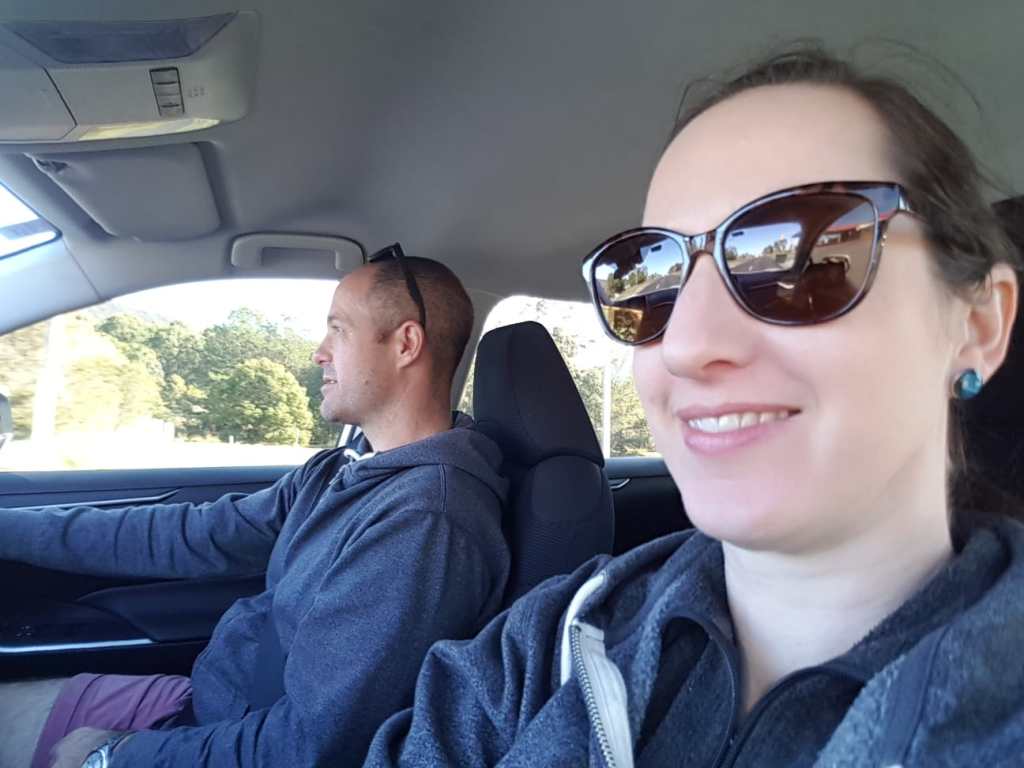
Two out of three: driving and wearing a hoodie. Hard to show communicating with ease in a pic.
When we were living in Cambodia, what did we miss the most from Australia? Of course family and friends is what we missed the most. Close to this was the beauty of Australia. But on a more trivial nature I missed the cold. I joke that in my time back in Australia I’m going to freeze my body temp to 10 degrees Celsius and then spend the next term in Cambodia thawing in the humidity. Though I don’t think the freezing would last that long. I missed the cold so much, I wrote a poem about it.
I also missed driving. We weren’t ready to drive in Cambodia when we first arrived. But having driven for almost 20 years, it was a skill that I missed every now and then. The other thing I missed I never would have thought I would miss until I did. That is communicating with ease. Learning a new language is hard. Using that new language is hard. I did improve in the three years that we were there. And yet still, communicating takes so much work and is fraught with so many issues. Now of course we have issues with communicating in our own language all the time. There are frequent miscommunications. But there are a bunch of interactions that are just simple and easy. Hello! How are you? Can I please have ….? (when at a store). Imagine those simple interactions being hard. They were. Or to order something and not be sure what will come out. One time I tried to order 3 eggs, and 9 eggs came out. Some friends affectionately call me ‘Craigy nine eggs’ now as a result. When even simple conversations are tricky, you miss communicating with ease. This is even without going into all the shared culture that you have with people from your home culture as I spoke about last post.



 corksincambodia.com