The last description in this series is Collaborator or Co-creator. These two descriptions capture mission as a joint work together between missionary and locals, as equals, where both parties play a role. Although technically not a picture, the overall sense of both of these is in the combining of two parties in partnership towards one goal. And while I’m not technically a linguist, it seems to me that the term collaborator gives the sense of labouring together.
A further aspect of these descriptions is the feature of both parties bringing expertise to the table in order to make something new. In this way, both parties are essential and neither is enough on their own. This resonates when I think about teaching theology; I’m trying to bring theological ideas through English to Khmer. My theological ideas are not enough on their own and neither is Khmer enough on its own. But in the combination, there is a synergy in the process of coming together. Co-creator builds on this coming-together aspect but also points to the creative aspects of partnerships, a creativity that mirrors the Creator. Something new is created as we wrestle with theology from English to Khmer.
I’ve heard it said that missionaries often find it hard to feel at home and yet quite weirdly can feel at home in airports. Not that airports aren’t stressful, but with the sheer amount of time spent in airports, you can feel more at home in them.
Now don’t get me wrong. That doesn’t mean that missionaries always do airports well. In fact, more time in airports probably just means more opportunities for stories. Stories like arriving at an airport 12 hours too early and with no sleep and no money, needing to walk around the airport, staying upright in-order to just stay awake.
Or arriving in Cambodia for the first time and handing over $2000 and our passports in the vague hope that we would get visas, that were thankfully granted a week later (that was a long wait).
Or the time you arrive in Cambodia and leave the airport having forgotten one of your five suitcases.
Or the time you arrive in a regional airport in Australia after 30 hours of flying, arriving with a tantrumming three year old and you get asked if this is his first time flying as to the reason for his meltdown (he’d already flown close to 10x in his life). He was just exhausted and over it with all the flying. This is also not to mention the amount of times we have all slept at the airport as we await connections.
Or the time you felt like a cast member from ‘Home Alone 2’ and need to mad dash across an international airport because you’ve been sitting at the wrong gate. That’s a $5000 mistake that I would have regretted. Now, as a result, I check the tickets much more closely now.
Despite all this experience and how familiar all airports feel, there is nothing better than leaving the airport having finished the trip.
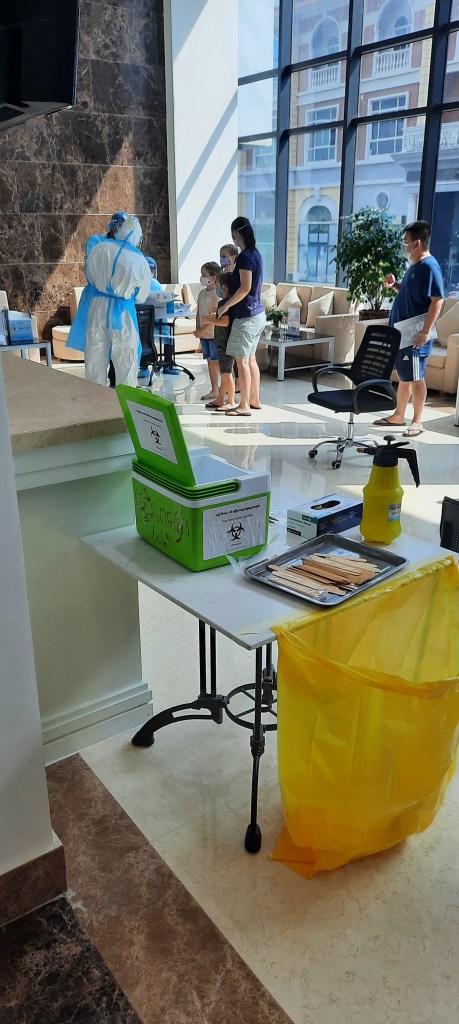
In my last post I summarised 17 months worth of life into 300 words concerning our extended home assignment in Australia. COVID affected both our home assignment and our return. We got our visas in February, and booked flights for April. We eventually returned to Cambodia to be greeted with COVID tests and hotel quarantine. Packing 40kgs of snacks was a vital move to help our family survive. But hotel quarantine wasn’t even our biggest challenge in returning. We returned to a city-wide lockdown and weren’t able to reconnect with friends. In our absence some friends had left and others were preparing to leave. We were returning and grieving.
Arrival also meant online-everything. Online schooling for Sam and the kids, online teaching for me and online churching for us as a family. If we had thought hotel quarantine was hard, this was harder in different ways. It was too much. After a month of trying life in Cambodia again, we as a family hit rock bottom. It was less re-entry stress and more pandemic stress. We couldn’t go on in this same fashion. We stripped everything back to the bone. With the support of CMS, our mindset was that even if we didn’t do any ministry for the year, but managed to weather this COVID storm, then our presence in Cambodia for years after would be worth this year of bunkering down and surviving.
As 2021 progressed, week by week and as restrictions lifted, we were able to gradually add more of normal Cambodian life and ministry back into our routines. By the end of 2021 we had returned to more normal functioning in life and ministry, all while wearing masks. Though, like everyone else, we were still a bit shell-shocked.
I remember going to a hotel in mid-2021 for a quick family break and having quarantine flashbacks. Am I able to leave our room, really? In September 2022 we were able to visit Australia for a holiday. On our return to Cambodia it felt weird to be able to just walk out of the airport, rather than go through all the COVID rigmarole that our return in 2021 featured.
Our home assignment in 2020 had two unexpected challenges. Home assignment is hard enough without extra challenges (that’s why we call it an assignment, it’s not a holiday). Both these challenges related to COVID and they both involved waiting. COVID made life hard in general, this included our church visits in the first half of 2020. We went from meeting in person to meeting online in a split second. Talk about whiplash. Then came the difficult news when our June flights to Cambodia were canceled.
Our first challenge was how to proceed. With the help of CMS we came to the plan of staying in Australia for the rest of 2020. This gave our family stability amongst a lot of unknowns, especially that our children could finish the academic year in Australia. We were in a season of waiting and while it was hard to wait, there was harder to come.
This harder news came at the end of 2020 in December. Our next challenge was that our visa wasn’t approved, so we had to cancel our January flights to Cambodia. That was rough. What was rougher was the unknown-ness of this second challenge. When flights were canceled the first time, we set a time to return. With visa uncertainty, would we ever get back to Cambodia? We were well aware that this has been the experience of some missionaries.
What I want to reflect on is that month of waiting and not knowing (late Dec until early Feb) was harder than the six months previously when we had set an arbitrary date to return. We were waiting and knowing. Waiting with knowledge is much easier than waiting without knowing. This is very much akin to Christian hope. We aren’t hopeful, as in whether we hope it will rain or not. We’re hopeful with more certainty. We’re certain of God’s love for us in Jesus Christ’s death and resurrection. We’re certain of Jesus’ promised return. Hope is waiting with knowing and that actually makes things easier than waiting and not knowing.
It’s been a while. Apart from our latest post, the post before that was one we did from Australia in 2020, before we knew our flights would be canceled, again. So what has been happening since then? This next series catches you up, not only on some of the details of our goings-on, but also adds in new cultural and missiological insights that we’ve picked up along the way. For those who receive our monthly updates, the beginning of this series will be a helpful reminder of our journey in recent years giving good context to where we are up to as well as going into details that we can’t always fit in our monthly updates. Hope you enjoy the ride.
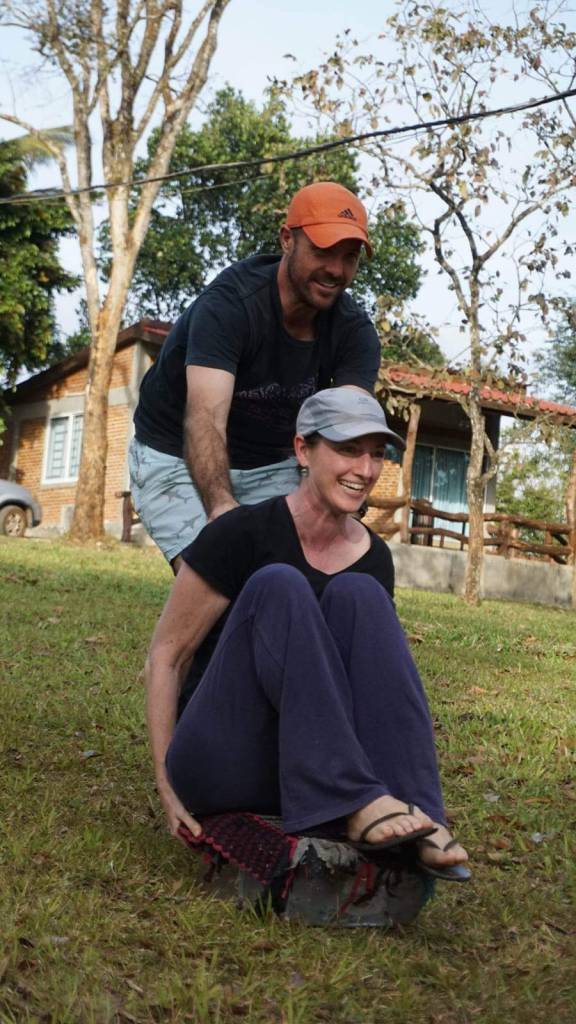
While the photo is anything but crazy, we took some time away to prepare for what is described below.
Missionary friends of ours (Arthur and Tamie Davis) have shared with us quite wisely that 2 months out from a transition (a move overseas for us) there is a change in dynamics. Craziness happens. Parents and children are both more stressed, easily agitated and so not functioning well. This change in functioning is both a grieving of leaving as well as an excitement about the next. This change in functioning is often combined with not sleeping as well and increased workload in preparations. Also people want to see you and you want to see people before you leave. The result is that this time is pretty crazy. In terms of my goals for my work, I need to learn to halve them and give myself and my family grace in this time.
As I reflect, part of the stress comes from pressure. The finality of the transition (compared to another year of more of the same) adds pressure to the now (the time just before leaving), both in terms of leaving well but also in terms (particularly for me and my personality) wanting to do too much in and with the time left. While at the same time, my head is more in imagining zone about our time in Cambodia, further taking any leftover brain space from preparations to leave. Pressure feels like it captures this period in a really visceral way, where our body is affected by this transition time. I’ve noticed myself being a bit more physically jittery (symptoms like heart racing at random times). My physio brain knows that muscle twitches like this further add to physical tiredness along with everything else.
This two month period is mirrored on arrival and so it helps me to set my expectations right for once we get there. We want to reconnect. There’s the reconnection of admin and all those start up jobs in a new place (or in a place you haven’t been to for a while). There’s the reconnection of relationships. When you first go to a new place, relationships from your home culture provide support while you build new relationships in your new location. This time, while relationships from Australia are closer given the time we’ve spent here, we’ve got good relationships that we head back to in Cambodia and so there is a sorting out how to give time to relationships in both locations; staying in touch with family and friends as you slowly disconnect and re-settling into the supportive relationship network that we have there.
As we come closer to coming home for a decent time, one thing that changes is how we look at life in Cambodia. Life in some ways doesn’t change. Cambodia doesn’t change. But the way we view it changes.
I remember early on in our time here in Cambodia, I was taking a tuktuk home and I was just overwhelmed by all the “new” I was experiencing. That tuktuk ride I stuck my head in a book to limit the new. Fast forward to a week ago, I noticed myself thinking about how we wouldn’t be around for a while and how we’d gotten used to life here. As a result of that thought, as I rode on my bike, I was looking at all the things, thinking about how I wouldn’t see them for a while. What had once caused me to hide was now something that I could handle, I was trying to take it all in.
Because of transition, my view on things had changed. If we’d just stayed on here without a break, I would not have noticed the same things. But, with the upcoming flight, my perspective had changed, my awareness of Cambodian life was different in the face of transition. In transition we are given the gift of reflection, and we are also given the gift of awareness; a similar awareness found when we reflect on the passage or speed of time in general.
One area that this awareness particularly impinges on is around friendships. Missionary friendships are in some ways different from friendships in home countries. What unites us is often a similar purpose, even if we are from different organisations or backgrounds. This unity often leads to friendships becoming closer quicker than they would elsewhere. But part of the pain of transitions is the awareness of relationships that have gotten close quickly in a context of fluid relationships; where people come and go more than they do in other places. This same awareness will come to us again in the opposite direction as we return from Australia to Cambodia. But right now, transition heightens my awareness in Cambodia (even as my head moves toward Australia).
One of the things I associate with transition is hassle. There’s the packing up. There’s the stress. There’s the actual transition. And then there’s the time once you arrive where it’s just slow in setting up and settling in. To those of us (like me) who are focused around efficiency, transition feels anything but efficient. Now of course transitions for missionaries are much more efficient than they used to be; spending 6 months on a boat travelling from one destination to another. With flights, transition is now much more compact, but still feels hard. The stress at either end is tiring. So it’s easy to see why the prospect of transition feels daunting.
However, I came across this other idea (not sure how). Not only that transition as a hassle, but transition as gift. The gift comes if you use it properly. Transition provides a neat boundary that normal day to day life doesn’t necessarily have. There is a clear beginning and end on a regular basis (like from term to term). The value of this clear boundary is the ability to wrap up one season with reflection. With this first term in Cambodia coming to an end there is an up-coming transition. I’m able to think back about the last three years and reflect on it. This helps me to learn from my time, but also helps me to transition as I get closure on what has occurred. When I’ve done this reflection before a holiday (like last year before our Chiang Mai time) it has also helped me to rest on that holiday having sorted through some issues before seeking down-time. So I find my rest is better having reflected.
For this next transition from Cambodia to Australia, while there will be some rest, there will be tough parts as we say goodbyes, settle in to a familiar, but in other ways unfamiliar place (given the changes that have occurred to us in this last three years). So reflecting well on what has been, this first term in Cambodia, will help me transition better. In that sense transitions provide a unique gift to us in terms of providing us with obvious points to reflect and think about what has gone before and what lies ahead.
Disclaimer: this is an ironic post highlighting the difficulty of transition. It paints a fairly bleak situation and expresses my tendencies but not the reality. I write this as a reminder to myself of my tendencies in order to try to counteract them in this really significant time. It is a reminder to give myself and my family time and grace as we face this significant change.
This is my guide to transitioning poorly. It is not exhaustive, nor ordered in any particular way. There may be overlapping themes coming through that express the personality of the author.
Get preoccupied with the details of moving countries, ensuring that this consumes all your thoughts, your emotional energy and depletes you of resources to care for yourself and your family.
Turn the grief that you feel in saying goodbye into anger that is easily released on those closest to you.
Fail to see that grief, stress and moving country is going to sap you of energy and so fill your diary full, just to spite yourself.
Assume that your family will not feel the same things as you and that you will all be fine. Children’s extra disobedience in this time is not a symptom of them feeling tired, grief, or anxiety themselves.
Also assume that if your child/children don’t say anything, this means they are coping fine with the big change ahead. Full steam ahead then. You have no issues to deal with.
Anger is the best way to deal with what you are feeling (regardless of whether it is stress or grief or anxiety). In fact get angry very quickly. This is always the best solution.
Say yes to more responsibilities in this time, because you can manage it 😉
Don’t waste time sitting, thinking, processing and reflecting. Give yourself more fully to more insignificant jobs that will make you feel better immediately and help you push deeper down those stronger, tricky feelings to deal with.
Disconnect from friendships early. Don’t get too close, it only hurts more when you leave.
Do you have any tips for transitioning poorly? I’m sure I’m not the only one who has a monopoly on transitioning poorly. Comment below so we can share the wealth of knowledge and all transition more poorly.
When we arrived in Cambodia, almost 3 years ago, my head was ready to dive into life here. As we went along and got half-way through our first 3-year term, I knew roughly when we would be heading back to Australia (late 2019). Six months out from going back to Australia for our first home assignment, I noticed a change in how much I was thinking about Australia (more than in the last 2 years). This thinking has only increased 3 months out, and even now with under 2 months to go it has further escalated. In order to finish well, my mentor suggested not counting days until I was a month out. This has been a good move, helping to keep my head here.
So where am I up to? With each week as we get closer to moving back to Australia for half a year or so, two things happen. The first is my excitement for returning home grows. I start thinking about it more and so it occupies more of my time. Not that I’m sitting around just thinking about Australia all the time. I’ve still got plenty of stuff here to do, but there is more head-space devoted to Australia now than there was even a few months ago. I picture catching up with family and friends, visiting familiar places and doing things that I would normally do in Australia (more time outside is a big one).
The second thing that happens, as we get closer to heading back, is grief. This grief is different from my son, who has now spent more of his life in Cambodia than Australia. Most of what he knows is Cambodia. For him to leave is different from me who has spent only a small portion of my life here in Cambodia. However, I still experience grief as I consider heading back. There is grief about saying good-bye, even to those that we will see again in 7 months. There is more grief for those we are saying good-bye to for good (as they return home to a different country). There is also the grief of just not doing things that we enjoy here together (getting local drinks like ទឹកអំពៅ, our being part of our neighbourhood or going to places that our family is now familiar with).
CMS prepares us for this by setting out the guideline that the first term on location should be three years. They encourage us to stay the whole time, without returning, so that we will feel settled here in Cambodia, before we return to Australia. This helps us to want to return to Cambodia for our second term (particularly with kids in mind). All I can say is that it has been gold advice for us. Cambodia is now known to us (with plenty more to know). So while we are excited for returning to Australia and to things known, we are also leaving Cambodia which is now known as well.
Grief and excitement are what we’re feeling as we prepare for another transition. Suffice it to say that it’s very easy to underestimate the tiredness that follows feeling all these things as we prepare to leave (not unlike the newness tiredness we felt in the beginning).






 corksincambodia.com