Post-arrival #2: Cultural observations on driving and Aussie ads

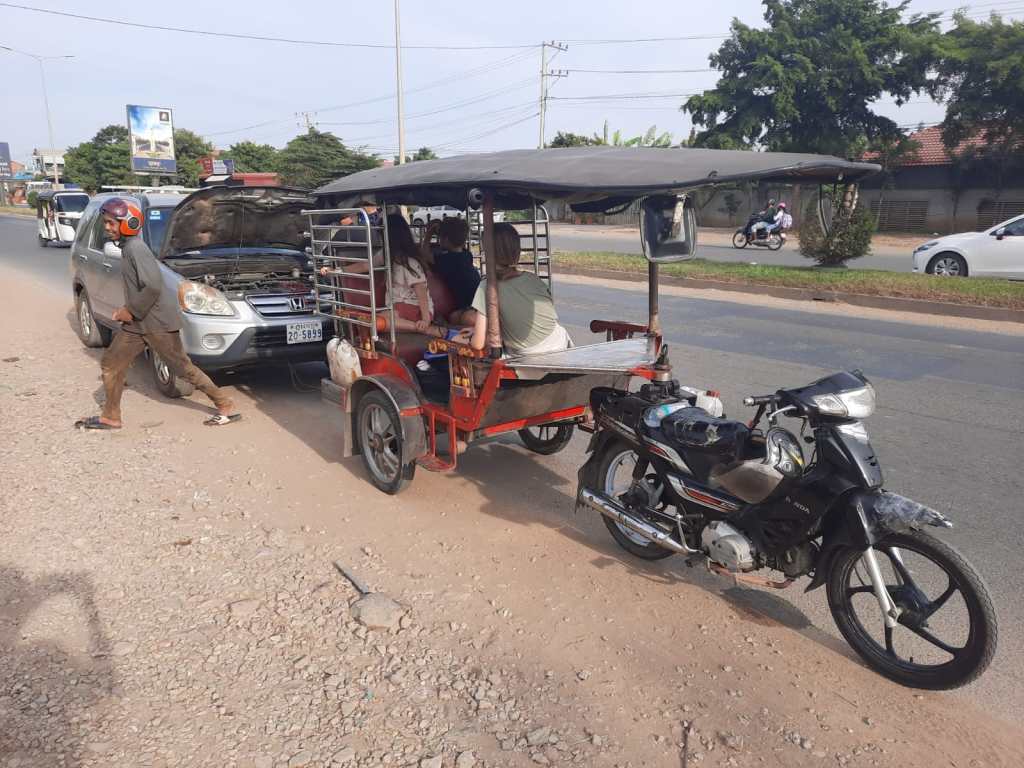
Never had my car towed by a tuk-tuk before

Returning to Cambodia, while we’ve come so far in language and culture, there is still tonnes to learn. The depth that I have been inculturated into the western society of Aussie life reveals just how much I am skimming the surface in Cambodia, even after five or six years. Whether it be the ease of using English over Khmer, through to being able to draw on numerous Australian or western cultural references that are just second nature and natural to me, versus knowing very little cultural references in Cambodia. I can’t even conceive of being able to riff off cultural depth by making up the phrase ‘We don’t need no edu-ma-cation’ (Pink Floyd and Homer mash up) in Cambodia, like I’m able to do from the West. Nevertheless, we press on with cultural observations.

In driving a car now, I am understanding Cambodian roads to a greater degree. Turning left, the equivalent of turning right in Australia, has its own rhythms. In Australia you wait for a gap and then speed across to the other side of the road. You’re picking the gap. In Cambodia you do the opposite. Instead of speeding out, generally you slowly drive forward and when you get the recognition that oncoming traffic is slowing down for you, you pull directly in front of them and then proceed to go slowly as you cross onto the side that you want to travel. You’re less picking the gap and more making the gap. This sort of slowly does it approach fits the way life is done here. You go slow at first and ten once you have made a gap you can speed up. In Australia, you just go fast from the word ‘go’.

One thing I noticed recently was I was happy for my kids to watch Aussie ads. Normally I feel like ads in Australia are a waste of time. They’re the filler between the good bits of whatever show or event I’m watching. Given the little Aussie content we get here in Cambodia, I found myself enjoying some Aussie ads with my kids. It gives us a window back into Aussie culture and society. Now, in some ways it is a fake view. But its also illuminating. Showing what Aussies love, what they want to be or have. While digging into the culture here, in some ways we lose some of our Aussie culture, or maybe just put it on hold.

Post-arrival #1: Changes to our Cambodian life

Craig being installed as an elder at the International Church

Yes COVID changed our life here in Cambodia when we arrived. But with COVID having less impact on society at present, our life here is still very different from our first term (2017-2019). In our first term we came to an unknown place with an unknown language and so our way of life was unknown and needed to be figured out, almost from scratch.

This time we returned to a known place, a known role and a language that we had begun to know. When we first arrived we were going to a Khmer church, our kids were going to a Khmer International school. Now our kids attend an international school for missionary kids and we go to an English speaking international church. When we first arrived 6 years ago, we would call a tuk-tuk driver if we wanted to go anywhere. Now we use an app, similar to Uber for tuk-tuks. When we first arrived I would go to the ATM every week to get out cash. We are not cashless yet, but now we are close to 50% cashless transactions and now have banking apps on our phones (which we didn’t have 6 years ago in Australia). When we first arrived we had to weather blackouts. Now we have a generator to assist in those times. When we first arrived, I rode a bicycle for 3 years. Now I ride a moto and can’t picture Cambodia without me using one, it’s so convenient. When we first arrived, driving was out of the question for us. Now we use a car more than we use a tuk-tuk. 

Life in Cambodia looks substantially different when you compare our first and second terms, COVID changes aside.

Pandemic arrival

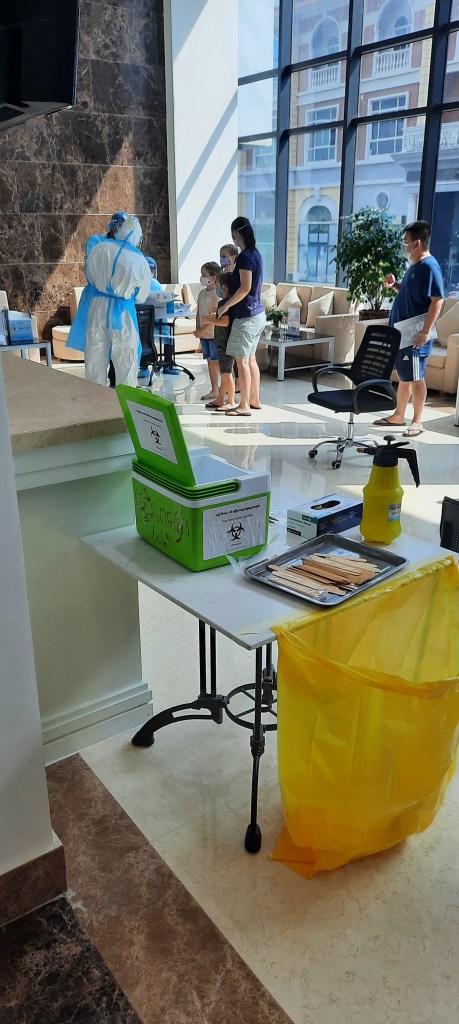
Testing so that we could leave quarantine

In my last post I summarised 17 months worth of life into 300 words concerning our extended home assignment in Australia. COVID affected both our home assignment and our return. We got our visas in February, and booked flights for April. We eventually returned to Cambodia to be greeted with COVID tests and hotel quarantine. Packing 40kgs of snacks was a vital move to help our family survive. But hotel quarantine wasn’t even our biggest challenge in returning. We returned to a city-wide lockdown and weren’t able to reconnect with friends. In our absence some friends had left and others were preparing to leave. We were returning and grieving.

Arrival also meant online-everything. Online schooling for Sam and the kids, online teaching for me and online churching for us as a family. If we had thought hotel quarantine was hard, this was harder in different ways. It was too much. After a month of trying life in Cambodia again, we as a family hit rock bottom. It was less re-entry stress and more pandemic stress. We couldn’t go on in this same fashion. We stripped everything back to the bone. With the support of CMS, our mindset was that even if we didn’t do any ministry for the year, but managed to weather this COVID storm, then our presence in Cambodia for years after would be worth this year of bunkering down and surviving.

 As 2021 progressed, week by week and as restrictions lifted, we were able to gradually add more of normal Cambodian life and ministry back into our routines. By the end of 2021 we had returned to more normal functioning in life and ministry, all while wearing masks. Though, like everyone else, we were still a bit shell-shocked.

I remember going to a hotel in mid-2021 for a quick family break and having quarantine flashbacks. Am I able to leave our room, really? In September 2022 we were able to visit Australia for a holiday. On our return to Cambodia it felt weird to be able to just walk out of the airport, rather than go through all the COVID rigmarole that our return in 2021 featured.

Life now is more Cambodia-normal.

Intro New Blog Series: Pre-arrival to Post-arrival

Image

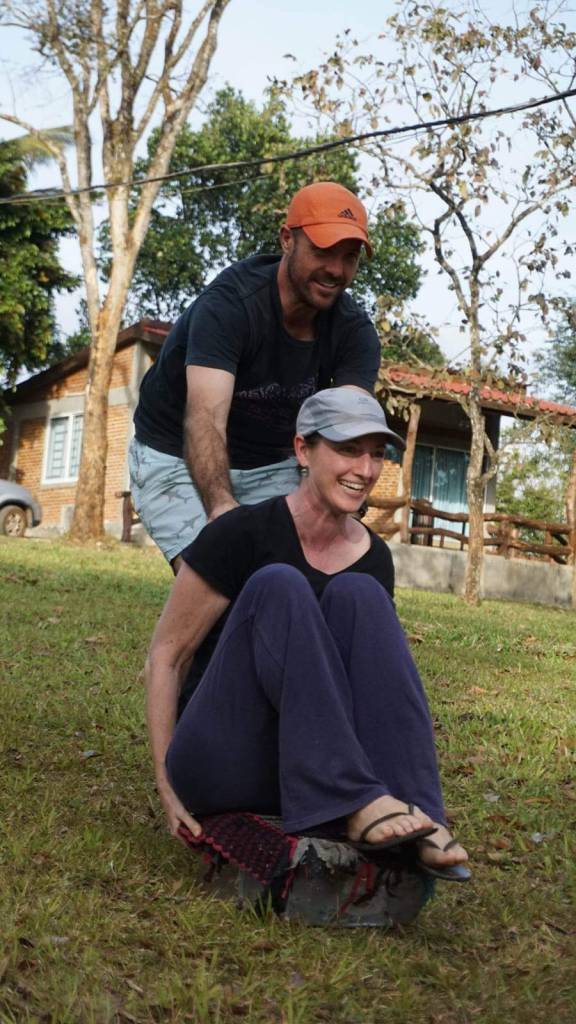
Ice-blocking down a hill at a recent holiday

It’s been a while. Apart from our latest post, the post before that was one we did from Australia in 2020, before we knew our flights would be canceled, again. So what has been happening since then? This next series catches you up, not only on some of the details of our goings-on, but also adds in new cultural and missiological insights that we’ve picked up along the way. For those who receive our monthly updates, the beginning of this series will be a helpful reminder of our journey in recent years giving good context to where we are up to as well as going into details that we can’t always fit in our monthly updates. Hope you enjoy the ride.

Digital dep #10: Feelings between 1st and 2nd term

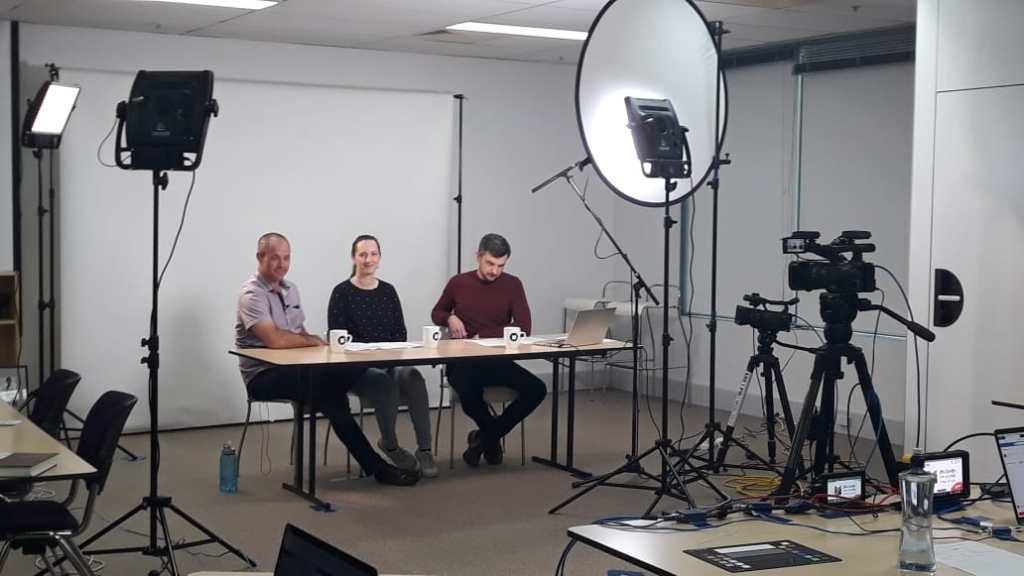
This post comes from the video that we did for Mission up Close with CMS in June. You can either watch it or read the summary below.

What’s it like preparing to go back to Cambodia for a second time, our second term? We were excited to be going to Cambodia for the first time and we’re excited to be returning for a second time. But the excitement is different. In the first term, there was so much new and ‘for the first time’ excitement. We didn’t know if they would let us in on arrival. We had little local knowledge and even less language. Thankfully we had some great support from other CMS families. There was uncertainty about how long it would take us to pick up Khmer, or when it would be best to start teaching at the Bible school. So the excitement of the first term was the excitement of all the new. There was a lot of tiredness related to the new too.

Second time around, there is excitement. But it’s the excitement of the familiar. Returning and being able to have decent conversations in Khmer, getting to a greater relational depth and understanding of the culture. Returning to good friends and to an area that we know well now. And on the flip side looking forward to returning and not having the major start up in language learning that we had in the first term. Enjoying the wins of improving in a language that we already have some skills in (though rusty at the moment). As I say in the video, learning in a less intense way.

Sometimes the familiar gets a bad wrap, particularly as we long for the new or the unfamiliar. And yet, sometimes it’s through the familiar that we find the truly new; coming to a deeper understanding (and so ‘new’) of what we already know. As a tourist, yes, you see lots of new places. As you stay in one ‘new’ place longer, it becomes new in a way that you never could know if it wasn’t familiar. You could say there’s more new in the familiar than there is in the new. For me the excitement of the familiar over the excitement of the ‘new’ is my preference at the moment.

Digital dep #5: What did we miss the most?

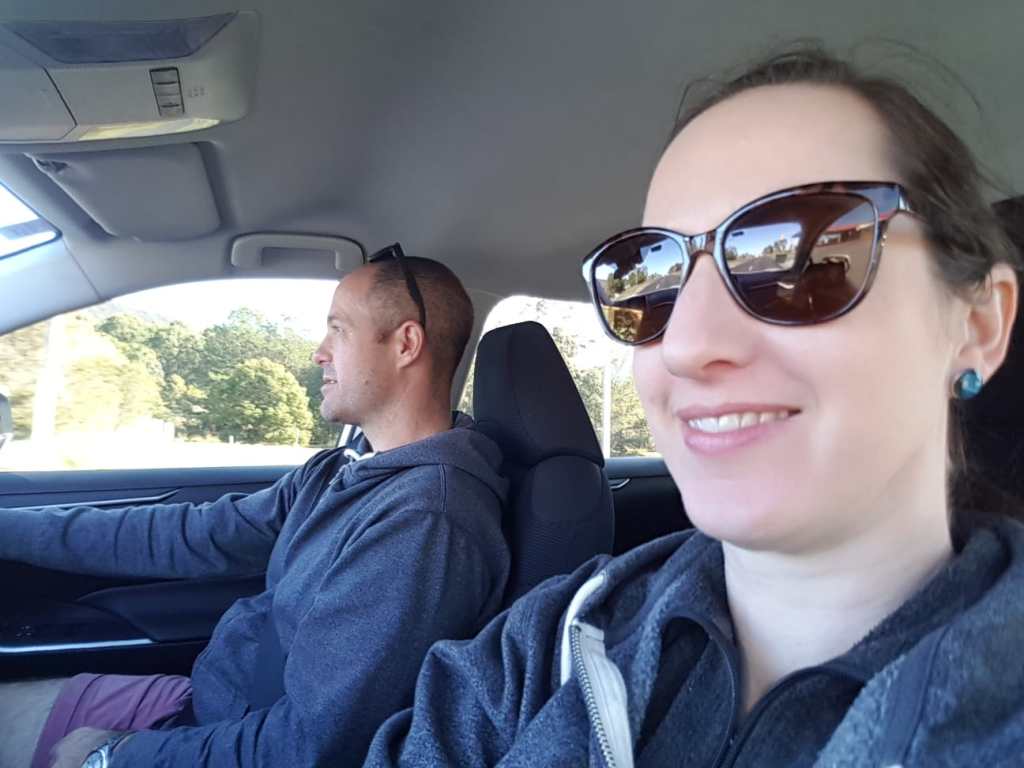
Two out of three: driving and wearing a hoodie. Hard to show communicating with ease in a pic.

When we were living in Cambodia, what did we miss the most from Australia? Of course family and friends is what we missed the most. Close to this was the beauty of Australia. But on a more trivial nature I missed the cold. I joke that in my time back in Australia I’m going to freeze my body temp to 10 degrees Celsius and then spend the next term in Cambodia thawing in the humidity. Though I don’t think the freezing would last that long. I missed the cold so much, I wrote a poem about it.

I also missed driving. We weren’t ready to drive in Cambodia when we first arrived. But having driven for almost 20 years, it was a skill that I missed every now and then. The other thing I missed I never would have thought I would miss until I did. That is communicating with ease. Learning a new language is hard. Using that new language is hard. I did improve in the three years that we were there. And yet still, communicating takes so much work and is fraught with so many issues. Now of course we have issues with communicating in our own language all the time. There are frequent miscommunications. But there are a bunch of interactions that are just simple and easy. Hello! How are you? Can I please have ….? (when at a store). Imagine those simple interactions being hard. They were. Or to order something and not be sure what will come out. One time I tried to order 3 eggs, and 9 eggs came out. Some friends affectionately call me ‘Craigy nine eggs’ now as a result. When even simple conversations are tricky, you miss communicating with ease. This is even without going into all the shared culture that you have with people from your home culture as I spoke about last post.

Digital dep #3: Culture as sharing

Do you know what that hand hold represents? I didn’t even get the hold right, let alone the meaning.

This is not the first time I’ve got this hand hold wrong. I think I have photographic evidence another time as well. Do you know what it stands for? Its not the standard V shape that you make with your 2nd and 3rd finger. Its not a symbol for money like I originally thought it was (and like my hand hold assumes). It is, as far as I know, a symbol for love: a heart. Contextually, it makes sense: a wedding.

I don’t think I realised how little culture I knew til I was back in a culture I knew well. Granted, I knew that it would take years to learn some culture and I’d still be only scratching the surface. But you don’t realise the storehouse of culture that we imbibe from our home culture. Decades of exposure, compared to a shallow immersion in Khmer culture.

In my home country I understand clothing trends: jean styles moving from bell-bottoms to bleached to straight to tight to so-ripped-there-is-barely-any-jean-material-left. I’m not even a fashion expert, and I know that basic transition. I would have no idea of the current clothing trends in Cambodia or where they have been or where they are going in Cambodia. I feel the lack of culture even more in relation to movies and songs. Being back in Australia and being able to reference lines from movies we share in common like “I’ll be back” or “How’s the serenity” without a strange look of “What did you just say?” Or being able to start a line and not need to finish it, like, “From little things ….”

Does this make me feel despondent, the shallow nature of my cultural understanding in Cambodia? Nah. Does that mean I just feel like giving up? Nah. Two things. I appreciate more my Australian culture and the depth that I have there. And I look forward to days, not when I can know all the cultural references made in a conversation down to the last proverb, but when I can share some of them with my Cambodian friends. The beauty of sharing a joke together. It seems to me that culture is a form of sharing.

Digital dep #2: Being there distantly.

Warning: This is a more abstract reflection on being a missionary

Before leaving for Cambodia I did a brief seminar on my thoughts on immersion and connection as a missionary as a sort of thought experiment of what it would be like to be a missionary in a new place, seeking to get to know (immersion) while also being known in another place (connection). Towards the end of my first 3 year term in Cambodia I wrote a post summing up my thoughts in this regard.

One of the surprises of first term was where we ended up on my made-up immersion/connection spectrum. In short: not as immersed as I thought. Now, as I reflect on that, I can see lots of reasons why. The main reason is captured in the missiology language of insider and outsider. I think the goal is to move towards being like an insider in a new culture (for us, Cambodia). What’s interesting is how far you can actually move towards being an insider. Of course, you can never be a true insider of a new culture, even if you’ve been there for yonks. There will always be a sort of distance.

But I don’t think that distance is wrong. In fact, in some ways, its necessary. One of the necessities of mission (exemplified in the CMS model of mission) is that we do it in partnership. We are sent. We are not lone rangers. We are part of a fellowship. That requires communication or connection. As you communicate, what you have to do is step back from experiencing in order to observe and document and describe. That distance is necessary in communicating with others, but it changes your stance toward the new culture. Again, not that distance is bad. We don’t say that a doctor should not have distance when they treat patients. In fact, some distance is necessary to be a good doctor. A good teacher has distance as they have to be able to see the whole in order to rightly teach the next step. Mission today requires more partner experience. We see this in the nature of mission communication. Not only is it prayer points that should be sent monthly, but videos, pictures, media that enables or assists partners, in some way, experiencing what the missionary experiences. In this sort of partnership model, there is a movement from the immersion of the missionary to the immersion of the partner.

This is where my thoughts on the missionary as bridge seem to really resonate.

Love to hear your thoughts on this: parts that you agree or disagree with.

Digital deputation series.

This time last year I didn’t think I would be starting a new blog series from Australia. We had planned to be back in Cambodia by now. COVID has changed many things for many people. As a result, we’re still in Australia. But we’re aiming at returning to Cambodia in January.

COVID also changed our time here. While we were able to visit all our partner churches, over half of our church visits were done digitally. We were flying by the seat of our pants with this digital deputation as churches were coming to terms with what church looked like in these crazy times. One week, I couldn’t have told you what Zoom was. A month later I used it almost daily.

One consequence for us is that we didn’t get to share with as many people as we would have liked about our time in Cambodia. Further, even when we did share, we didn’t have the same opportunity that you would normally have to go a bit deeper when you are face to face.

To try and remedy that lack of connection, this blog series will cover some of the things we shared about in our church visits. It will also help us consolidate our thoughts as we gear up for our second term in Cambodia early next year.

Questions please…

I used this photo from an earlier blog. 10 points if you can find the title for the previous post.

Ladies and gentlemen, lend me your questions.

We’re looking forward to catching up with many of you in person this home assignment in Australia. In order to assist us I would love it if you could share questions that you may ask us in person, prior to us meeting in person. This doesn’t mean that you can’t ask us these questions in person. But if I’ve thought about these questions and have a few answers prepared pre-conversation I’m likely to give a better answer.

My thought is also to blog a few FAQ, not to detract from being asked these in person, but so that we can go deeper together in our experience of Cambodia as we share about our time there. This is essentially a strategy to strengthen our partnership together.

Questions about anything, welcome. Questions about family life, about language, about Cambodia, about anything else related.

So without further adieu, I’ve loved to hear any questions you may have from our first term in Cambodia. Send them to me anyway; comments below, an email, facebook or other.

Fire away.