Mission hypothesis #5: Pie time

trivialpursuit-pie_3138286c

This post is not about food despite the title. In this post I’m trying to articulate what I bring to the table as we go to Cambodia. What do I, an Aussie Christian, trained in the Anglican tradition bring to a non-Western context, a place I’m unfamiliar with to say the least? Gone are the days when I would go assuming I had all the answers. But neither is the alternative true, that I bring nothing to the table either. So what do I bring? How does the changing context of mission and my attempt at being vulnerable fit with how I’ve been trained and finding a way to serve?

This is where the game Trivial Pursuit may assist us. In Trivial Pursuit its not good enough to know trivia in one area, like Sport or Geography. What’s needed is multiple pieces of pie, not just the same colour. As a missionary, we don’t go over providing all the pieces of the pie. What we provide is one piece of the pie. I choose blue. Blue’s my favourite. My life experience, training, faith, and whatever else, all go into making up my blue pie – many different aspects feed into my perception (how I see, read and experience the world, myself and God). What I bring is me.

In this sense, my blue piece is unique and vital, but it’s not the whole. It’s one amongst many others. Whats needed is many pieces to move towards the center in order to finish the game. This way of viewing my part means that I am needed, but not in a dominant way. I have things to bring, but I also have much to learn. This model of mission seems to resonate with the idea of international teams that I came across a month ago on a friends blog. We don’t come in as the experts, nor do we seek to disappear eventually, but we remain in a ongoing, team way. The idea that iron sharpens iron or many advisers win a war is what’s needed in the long term. Not that we necessarily get to a point of complete agreement, or absolute truth, but we work together to serve in the context that God provides for us.

So who’s hungry for some perception pie? Maybe blue-berry.

Mission hypothesis #4: Eat what they eat

yummy-yummy-yummy-i-got-love-in-my-tummy

The old saying that the way to a man’s heart is through his stomach is definitely proved by me. In a similar vein, the way to a culture is through their meals. This is going to be such a tough principle for me to live out…

Being local in my eating practices is not just about fitting in, but a wonderful way to learn. To enter into a mealtime is to enter into the culture. Insights into relational dynamics of families and friends are on view. Expressions such as saying grace or even a simple ‘cheers’ or ‘dig in’, reveal what is important to people. The local Cambodian phrase ‘Nyum Bai’ meaning ‘to eat rice’ or ‘let’s eat’ or even ‘have you eaten?’ portrays a concern for the other backed up with an act of generosity.

In Melbourne, as part of our training, we were given the task of completing a worldview survey in order to help better understand another culture. I was surprised by how much was revealed about what a culture loves and how it works through studying their meal dynamics.

So food is not only the way to a man’s heart (and many women as well), but it’s also the way into a culture. I’ll definitely enjoy this aspect of culture learning-to-love. “Enough parsing verbs. I’m off to do some culture learning at lunch.”

Aussie reflection: What does Maccas or doing 11 wheat bix for breakfast reveal about Aussie culture? Do you have any examples of food or meal practices that reveal our culture?

Mission hypothesis #3: Love what they love

_42441531_aussiefans

I remember a good friend describing following Jesus as learning to love Jesus like his followers, not just knowing things about him (almost as though from a distance). This friend used the example of cricket. You can’t really know cricket until you’ve learnt to love it like die hard fan.

As we go to Cambodia, we often talk about learning to love the people as a way of getting to know their culture. Another way of putting this is learning to love what they love. What we do when we love what others love is see things more from their perspective.1 This will be hard, because we have our own loves; loves we have learnt from growing up in Australia. So we’ll need to un-love some of our Aussie loves in order to love some new Cambodian loves. But in a sense it will be no different from the dad that plays with his son in order to love what his son loves. I'm going to beat you, Dad!

Now that will take time and is a complicated process, but part of the way we aim to do this through our judgments. Growing up in Australia we’ll have been shaped by a system that helps us make judgments about the things we come across in our lives. This will have been changed somewhat as we become Christians, but not completely. The problem is that this system of judgments won’t work as well in Cambodia. It’ll probably lead us to wrong conclusions about Cambodia people and culture and may even be a barrier to us being able to love them and learn what they love. In order to move to loving what Cambodian’s love, we hope to suspend judgment in order to prevent negative attribution.

These two phrases stood out for me at St Andrews Hall. Suspending judgment means not witholding judgment, but just being slow on our judgments. Negative attribution refers to viewing new things, situations or people that are different as bad. Often we make judgments too quick and when we make them about things that are different, it is often with this negative spin. Why? Because they don’t fit the system we’re used to. The idea for us in Cambodia will be that we try to slow down so that we don’t hurt somebody or miss the beauty of the different. A very similar tip, along these lines, is to make lists of all the things that another culture does better than our own.

It’s these kind of tips that will hopefully help us on the way to learning to love what Cambodians love.


  1. I read somewhere similar that truly listening means listening for what others love. In this practice you are then opened up to the other in ways that remain closed if you only listen for content or for your turn to speak. 

Mission hypotheses #2: Vulnerable mission

e681137b8cf8fe4ba25f2476d36d354a-tortue04

I’ve been guilty of this rhetoric: “What they need is …”, followed by, “and I can provide that.” Have you? Our talk about mission sometimes comes across this way. Yet, from our time in St Andrews Hall, we’ve been persuaded to adopt a different approach – vulnerable mission. I’m not sure where the term originated, but Jim Harries uses it and so I suspect it is his.

The vulnerable missionary functions in the local language, rather than English; even if English is becoming more common. Over time, the vulnerable missionary attempts to think and behave in local ways rather than the way of their home country. The vulnerable missionary doesn’t seek to hold power over locals through their resources – whether financial or intellectual or otherwise. In a sense, the picture of a vulnerable missionary is one who gives over more and more power and control to those around them.

The vulnerable missionary lives in two worlds. They don’t live as though they were locals (because they never can be), nor do they live as though they were still in their home of origin. What they do is live in two worlds. Harries describes it in this way, ‘A VM [vulnerable missionary] must be ready to move between two lifestyles, and to accept them both (essentially) as they are’.1

I’m attracted to this approach and think it has many advantages. For starters, it seems to tie in well with recent missiology, where it is less about importing external resources and more about discovering internal resources. It also matches well with changes in descriptions of poverty (another gem from our time at St Andrews), where poverty is less about lack and more like a web of entanglement.

What this means for us in Cambodia is that we won’t seek to be fully Cambodian as though we didn’t have any western roots. But on the other hand we will attempt to function in local ways and with local resources, thus stripping ourselves of power in order to empower those around us. I think this will be particularly important in theology as I teach, making sure I constantly give over control to my students, in different ways.

To round this post off, what I think vulnerable mission does to the rhetoric that I began with (this is what they need and I’ve got just the thing…) is not remove it. Obviously, there is a need of some sort. What vulnerable mission does is shape how we offer ourselves: as those with vulnerability, not as those to the vulnerable.

To discuss or ponder: What might vulnerable mission look like in an Aussie context?


  1. Harries, Jim Theory to Practice Vulnerable Mission: An Academic Appraisal (2012), pg. 102. 

Mission hyptheses #1: Changing context

ffedc5f3deaff25ebc03acca8631ae76704afcac

This first hypothesis is almost an introductory post as well. The next post will move forward in what our mission approach will look like. This post stands back a little and surveys the recent history. Surveying the recent changes in mission ‘strategy’ (for want of a better word) sheds light on our particular approach in Cambodia. In this survey I’ll be making gross generalisations and may misrepresent many things. Please contribute and sharpen my thinking where I’m off the ball.

There has been a shift in mission thinking and approaches to mission. You could characterise the older style of mission approach as closer to colonialism and dare I say it, ‘the West is Best’ approach. This is not to denigrate previous mission thinking but to summarise it. What we’ve seen occur in the last century is a shift from mission being from the ‘West to the rest’ to ‘from everywhere to everywhere’. Another way to put it is from one centre of mission to, what I heard from a mission friend, a ‘polycentric’ approach to mission (multiple sending areas). Here I’m delving into topics that I am only a novice in and much more has been written and is still being debated up to this point.

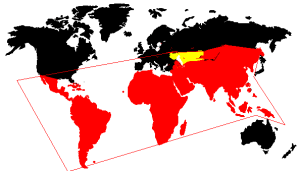
While I’m confident on the fact that there has been a change in approaches to mission, I’m less confident on the causes or explanations. Has the change in mission centre from the West to the Rest coincided with the shift from colonialism to globalisation? thirdworldmapHow much does the growth of the church in the ‘global south’ (a term used to describe areas of the world that fall in the southern hemisphere, but also as a category to distinguish from the developed West) play into this change? My guess is that the ‘global south’ growth is a major part of this change, of which there are probably many reasons or causes.


I’m sure there is much written on this topic that I should have consulted. Nonetheless, the result of this change in our mission approach (whatever its causes) will become clearer in the following posts in this series.

Mission series heads up: The rationale

testing-in-progress-floor-stands-p707-13371_zoom


This post is a heads up on the mission series starting next week. I wanted to share my purpose in this series before we begin. In effect, I hope this series is like a hypothesis in a science experiment. You begin with a hypothesis. Then the experiment is set up to test that hypothesis and see if it stands. Based on the results you determine whether the hypothesis needs to be discarded, modified or conditionally confirmed.

This series is my hypothesis. Over the next few weeks I’ll be sharing what we hope will be the way we approach life in Cambodia as we seek to share the good news of Jesus in a new place. The benefit of sharing our approach will be a) for us, that we solidify our thoughts in a way that helps us better implement them next year; b) for you, that you’ll gain an insight into some of the decisions we make about living in Cambodia; and c) for us in a number of years time, we’ll be able to reflect on what actually happened in light of our initial thoughts and so in a number of years, begin to test our hypothesis – learning and growing as a result. But, before a hypothesis can be tested, it must first be stated, so on with the series.

Furthermore, most of my thoughts in this series have risen as a result of the great training that I was a part of earlier this year. Any brilliance comes from the these insightful missional teachers (missiologists). Anything below par, is all me.

And PPS, no just kidding, on with the series…


Catch up on Cambodia: Wrap up

rear-view-mirror

Looking back over this series, we’ve began with the origins of Cambodia, and moved through to more recent international influences. This paved the way for an snap shot of the Khmer Rouge, zooming in on the events and the effects of this regime.

In a sense … the taste buds kind … this series is really only a taster of Cambodia. I have much to learn about Cambodia and Cambodian ways of life. Hopefully getting a glimpse of Cambodia’s past and present will help you journey a long with us as we go and experience Cambodia – testing these early pictures. But also, hopefully this series will provide some context for the next series on mission principles. As we speak about how we will seek to share Jesus in Cambodia in specific ways, hopefully you’ll have a sense of the context that we will be serving in.

Catch up on Cambodia: Effects of Khmer Rouge

The effects of the Khmer Rouge still linger. As we get to know Cambodian culture, the effects of the Khmer Rouge provide an avenue into our learning about the culture.

  1. A nation suffering from PTSD. This, in a sense, seems to encapsulate where Cambodia is up to. The effects of the Khmer Rouge run deep and long. It has affected every aspect of society and will effect the culture for a long time; much like the effects of war seen in PTSD sufferers (Post-traumatic Stress Disorder). You see the suffering in differing ways. Some will be dealing with their past, by not dealing with it – running headlong into materialism to forget or deny the past. Some deal with it by bringing the past too much to the fore. One friend said people speak about it so much that it is unhelpful. While it is good to speak about our past, there are helpful and unhelpful ways of doing that.
  2. Double youth boom. Cambodia’s age demographic is completely opposite to Australia’s. Where we have an aging population, Cambodia is heavily weighted towards youth, with 50% of the population under 22. This is the result of the Khmer Rouge’s policy, not only of ridding the population of the educated (those often with age), but also of the unable to contribute to increased rice production (generally those who were elderly or disabled). On top of this was the pregnancy push during the war in order to expand the working population. The effect down the line, now is not only were the elderly wiped out in Cambodia creating an imbalance in the country towards youth, but those youth have now had families bringing on a second youth boom.
  3. A loss of education. Not that education is gone completely, but killing off all the educated, combined with the survivors having grown up during a period of war means that education in the country has been significantly affected.
  4. Gospel openness. From what I have read, one of the unintended consequences of the Khmer Rouge has been to create a culture of openness in Cambodia in relation to international influences. Their need for assistance following the war seems to have made the country open to the outside world, more so than their neighbours. Global interaction in Cambodia through many international organizations has created a air of relaxedness to the outside world that may help pave the way for the gospel to be preached freely and openly. Also, having witnessed the horrors of the Khmer Rouge, people may be more open to the good news of Jesus.
  5. Rapid development. Although more complex I suspect there is a link between the Khmer Rouge and the rapid development that the country, particularly the urban areas, are experiencing. The ashes of the Khmer Rouge have provided the space for an influx of money and development following and as a result of the war. And while much of the country remains in poverty, there is substantial development, particularly in Phnom Penh. People are saying that in leaving Phnom Penh and returning in 6mths time you won’t recognize the place because of all the change going on.


Here are five pictures of the current state of Cambodia following the Khmer Rouge as we think about sharing the good news of Jesus. Thoughts? Have you had a similar picture or different of Cambodia?

Catch up on Cambodia: Very recent Hx

khmer4

Out with the new,

In with the old.

This was the Khmer Rouge’s strategy. They wanted to make the country prosperous again. Their strategy was to return the country to year zero, getting rid of modern accretions; going back to their roots. Anyone with education was classed as ‘new’ and received an immediate death sentence. Those kept were the ones who worked the land or didn’t have an education; the ‘old’. The plan was to massively up rice production to be exported and the method was through a commune strategy. Possessions, money, books were not only useless, but potentially harmful. Anyone with an education was targeted and killed. This was Cambodia’s ‘great leap forward’, done at break-neck speed.

The tactics of the Khmer Rouge were deception. The first was a false alarm call of bombing in Phnom Penh in 1975. From there deception flowed as children were pitted against parents to rat our anyone with an education. The Khmer Rouge soldiers were mostly young, yet their targets were any age and any religion; anyone that couldn’t contribute to their plan, young and old alike, both the religious and irreligious. In the few short years that the Khmer Rouge were in power, one quarter of the 8 million people in Cambodia died. khmer_rouge2_wide-3d773a7c402079fa5e8485ff03184bffba209cb3-s900-c85Half of those 2-3 million were killed, executed. The other half died from the effects of war, poverty, famine and disease.
 

The Vietnamese captured Phnom Penh from the Khmer Rouge in 1979. What followed was a 14 year struggle to work out how to bring political stability to a wounded country. Next post we explore some of the larger effects of the Khmer Rouge on the nation of Cambodia.

Catch up on Cambodia: More recent Hx

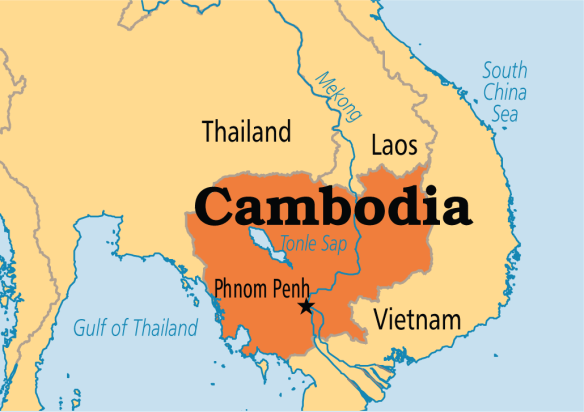
As we move closer to our time, Cambodia’s history is set in the context of its neighbours that we are more familiar with. Geographically, Cambodia can be found in the middle of your TV; Thailand on one side and Vietnam on the other. The relationship with both these countries is complex. There have been times of peace and cooperation between them and times of war. Both Thailand and Vietnam have sought to take advantage of Cambodia at different stages.

As you move further a field, more distant neighbours have also contributed to Cambodia’s history. China has had varying degrees of influence. This seems to be linked to Russia’s involvement in Cambodia. Of course there is also the colonial influence of France. The US, too, have played a part in the country’s history. All of these countries have had significant interactions with Cambodia, particularly in the modern era. We look forward to being in Cambodia and to delve into these influences as we get to know the culture.

Furthermore, most countries in the world have been affected by the Cold War period (communism vs capitalism or East vs West). Cambodia shares in this influence too. Prince Sihanouk’s rule of Cambodia in the 1950’s walked a fine line between capitalist and communist supporters in his own government. Communist parties formed in the country. Both sides of the Cold War would play their part in the events that led up to the Khmer Rouge.


camb-mmap-md