Mission hyptheses #1: Changing context

ffedc5f3deaff25ebc03acca8631ae76704afcac

This first hypothesis is almost an introductory post as well. The next post will move forward in what our mission approach will look like. This post stands back a little and surveys the recent history. Surveying the recent changes in mission ‘strategy’ (for want of a better word) sheds light on our particular approach in Cambodia. In this survey I’ll be making gross generalisations and may misrepresent many things. Please contribute and sharpen my thinking where I’m off the ball.

There has been a shift in mission thinking and approaches to mission. You could characterise the older style of mission approach as closer to colonialism and dare I say it, ‘the West is Best’ approach. This is not to denigrate previous mission thinking but to summarise it. What we’ve seen occur in the last century is a shift from mission being from the ‘West to the rest’ to ‘from everywhere to everywhere’. Another way to put it is from one centre of mission to, what I heard from a mission friend, a ‘polycentric’ approach to mission (multiple sending areas). Here I’m delving into topics that I am only a novice in and much more has been written and is still being debated up to this point.

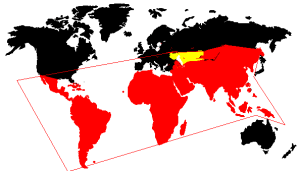
While I’m confident on the fact that there has been a change in approaches to mission, I’m less confident on the causes or explanations. Has the change in mission centre from the West to the Rest coincided with the shift from colonialism to globalisation? thirdworldmapHow much does the growth of the church in the ‘global south’ (a term used to describe areas of the world that fall in the southern hemisphere, but also as a category to distinguish from the developed West) play into this change? My guess is that the ‘global south’ growth is a major part of this change, of which there are probably many reasons or causes.
I’m sure there is much written on this topic that I should have consulted. Nonetheless, the result of this change in our mission approach (whatever its causes) will become clearer in the following posts in this series.


Mission series heads up: The rationale

testing-in-progress-floor-stands-p707-13371_zoom


This post is a heads up on the mission series starting next week. I wanted to share my purpose in this series before we begin. In effect, I hope this series is like a hypothesis in a science experiment. You begin with a hypothesis. Then the experiment is set up to test that hypothesis and see if it stands. Based on the results you determine whether the hypothesis needs to be discarded, modified or conditionally confirmed.

This series is my hypothesis. Over the next few weeks I’ll be sharing what we hope will be the way we approach life in Cambodia as we seek to share the good news of Jesus in a new place. The benefit of sharing our approach will be a) for us, that we solidify our thoughts in a way that helps us better implement them next year; b) for you, that you’ll gain an insight into some of the decisions we make about living in Cambodia; and c) for us in a number of years time, we’ll be able to reflect on what actually happened in light of our initial thoughts and so in a number of years, begin to test our hypothesis – learning and growing as a result. But, before a hypothesis can be tested, it must first be stated, so on with the series.

Furthermore, most of my thoughts in this series have risen as a result of the great training that I was a part of earlier this year. Any brilliance comes from the these insightful missional teachers (missiologists). Anything below par, is all me.

And PPS, no just kidding, on with the series…


Catch up on Cambodia: Wrap up

rear-view-mirror

Looking back over this series, we’ve began with the origins of Cambodia, and moved through to more recent international influences. This paved the way for an snap shot of the Khmer Rouge, zooming in on the events and the effects of this regime.

In a sense … the taste buds kind … this series is really only a taster of Cambodia. I have much to learn about Cambodia and Cambodian ways of life. Hopefully getting a glimpse of Cambodia’s past and present will help you journey a long with us as we go and experience Cambodia – testing these early pictures. But also, hopefully this series will provide some context for the next series on mission principles. As we speak about how we will seek to share Jesus in Cambodia in specific ways, hopefully you’ll have a sense of the context that we will be serving in.

Catch up on Cambodia: Effects of Khmer Rouge

The effects of the Khmer Rouge still linger. As we get to know Cambodian culture, the effects of the Khmer Rouge provide an avenue into our learning about the culture.

  1. A nation suffering from PTSD. This, in a sense, seems to encapsulate where Cambodia is up to. The effects of the Khmer Rouge run deep and long. It has affected every aspect of society and will effect the culture for a long time; much like the effects of war seen in PTSD sufferers (Post-traumatic Stress Disorder). You see the suffering in differing ways. Some will be dealing with their past, by not dealing with it – running headlong into materialism to forget or deny the past. Some deal with it by bringing the past too much to the fore. One friend said people speak about it so much that it is unhelpful. While it is good to speak about our past, there are helpful and unhelpful ways of doing that.
  2. Double youth boom. Cambodia’s age demographic is completely opposite to Australia’s. Where we have an aging population, Cambodia is heavily weighted towards youth, with 50% of the population under 22. This is the result of the Khmer Rouge’s policy, not only of ridding the population of the educated (those often with age), but also of the unable to contribute to increased rice production (generally those who were elderly or disabled). On top of this was the pregnancy push during the war in order to expand the working population. The effect down the line, now is not only were the elderly wiped out in Cambodia creating an imbalance in the country towards youth, but those youth have now had families bringing on a second youth boom.
  3. A loss of education. Not that education is gone completely, but killing off all the educated, combined with the survivors having grown up during a period of war means that education in the country has been significantly affected.
  4. Gospel openness. From what I have read, one of the unintended consequences of the Khmer Rouge has been to create a culture of openness in Cambodia in relation to international influences. Their need for assistance following the war seems to have made the country open to the outside world, more so than their neighbours. Global interaction in Cambodia through many international organizations has created a air of relaxedness to the outside world that may help pave the way for the gospel to be preached freely and openly. Also, having witnessed the horrors of the Khmer Rouge, people may be more open to the good news of Jesus.
  5. Rapid development. Although more complex I suspect there is a link between the Khmer Rouge and the rapid development that the country, particularly the urban areas, are experiencing. The ashes of the Khmer Rouge have provided the space for an influx of money and development following and as a result of the war. And while much of the country remains in poverty, there is substantial development, particularly in Phnom Penh. People are saying that in leaving Phnom Penh and returning in 6mths time you won’t recognize the place because of all the change going on.


Here are five pictures of the current state of Cambodia following the Khmer Rouge as we think about sharing the good news of Jesus. Thoughts? Have you had a similar picture or different of Cambodia?

Catch up on Cambodia: Very recent Hx

khmer4

Out with the new,

In with the old.

This was the Khmer Rouge’s strategy. They wanted to make the country prosperous again. Their strategy was to return the country to year zero, getting rid of modern accretions; going back to their roots. Anyone with education was classed as ‘new’ and received an immediate death sentence. Those kept were the ones who worked the land or didn’t have an education; the ‘old’. The plan was to massively up rice production to be exported and the method was through a commune strategy. Possessions, money, books were not only useless, but potentially harmful. Anyone with an education was targeted and killed. This was Cambodia’s ‘great leap forward’, done at break-neck speed.

The tactics of the Khmer Rouge were deception. The first was a false alarm call of bombing in Phnom Penh in 1975. From there deception flowed as children were pitted against parents to rat our anyone with an education. The Khmer Rouge soldiers were mostly young, yet their targets were any age and any religion; anyone that couldn’t contribute to their plan, young and old alike, both the religious and irreligious. In the few short years that the Khmer Rouge were in power, one quarter of the 8 million people in Cambodia died. khmer_rouge2_wide-3d773a7c402079fa5e8485ff03184bffba209cb3-s900-c85Half of those 2-3 million were killed, executed. The other half died from the effects of war, poverty, famine and disease.


The Vietnamese captured Phnom Penh from the Khmer Rouge in 1979. What followed was a 14 year struggle to work out how to bring political stability to a wounded country. Next post we explore some of the larger effects of the Khmer Rouge on the nation of Cambodia.