Post-arrival #3: Language update

See the books near my drink bottle? They are the Khmer and English versions of key textbooks

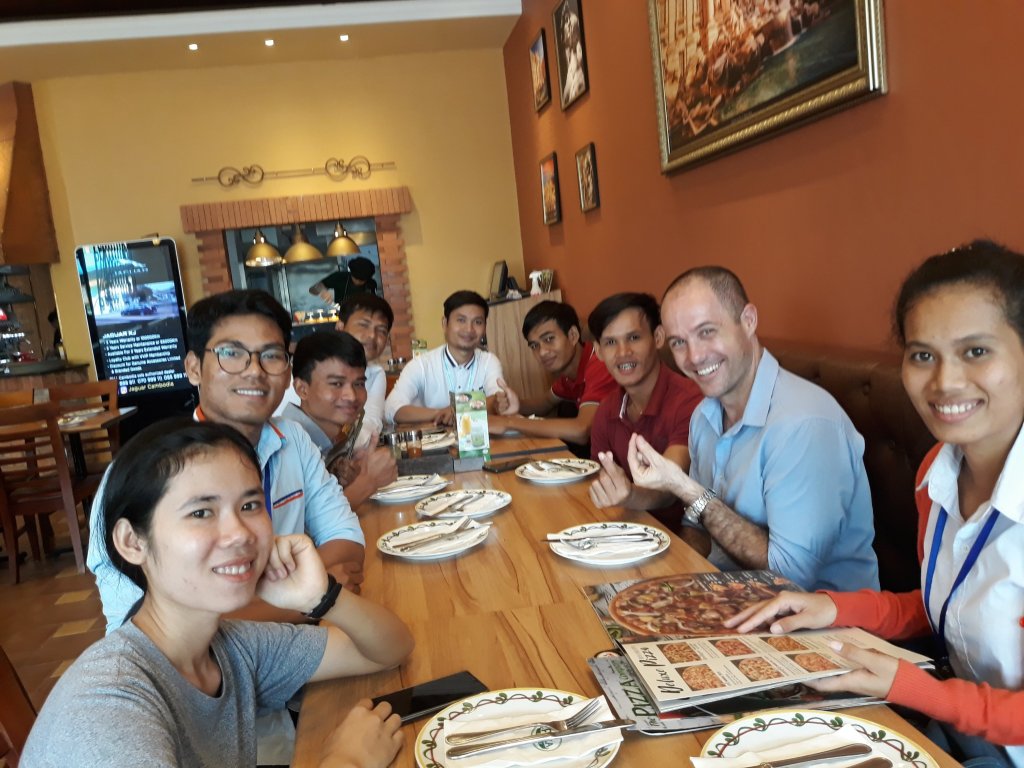
Since my last language update, a lot has changed, a lot of time under the bridge. I get the question now, more than I used to: Are you fluent? My answer: Enough. Maybe you could call it functional fluency. When I speak to new Khmer people and they comment on my Khmer, my answer is usually ‘some days enough, some days not enough’. I can enter a conversation with a Khmer person now and most days I can understand what they are trying to communicate with varying degrees of clarity concerning details. I don’t feel nervous talking in Khmer anymore. Five years of language investment and I’m reaching the stage where I am generally comfortable communicating in Khmer. Do I still get lost when two Khmer people are speaking to each other? Absolutely. Are there times when I need to use English because I don’t understand? Yup. But these times are becoming less and less.

In the classroom my need for a translator is diminishing. Since January I’ve started to teach without a translator present. I say to people that the quality of my content that I can deliver would go from an 80% with a translator to a 70% without one. I would be missing some insights and descriptive clarity, but I can get the most important points across now.

One thing I have noticed. When I began teaching I couldn’t really read technical Khmer language so I used to write my own notes in Khmer and get them checked and then use that. Since returning I have moved to a situation where I write my notes in English then get a translator to translate it into Khmer for me. My reading ability means that I can use their translation in a way that I couldn’t in the beginning. As a result my reading of Khmer has improved while my typing of Khmer has slowed and become more tricky.

The way I look at my learning of Khmer up till now is that my language learning has been an investment that I now get to reap the rewards. I can go deeper relationally. I can go deeper in my ability to communicate and I don’t get a headache from using Khmer too much like I used to. I still get tired after using Khmer. I still get lost when using Khmer. But I’m content with my ability while all the while still seeking to improve. Improvement at present is particularly around listening to Khmer sermons to flood myself with input language times where I’m just getting more and more used to local phrases and ways of expressing things.
Post-arrival #2: Cultural observations on driving and Aussie ads

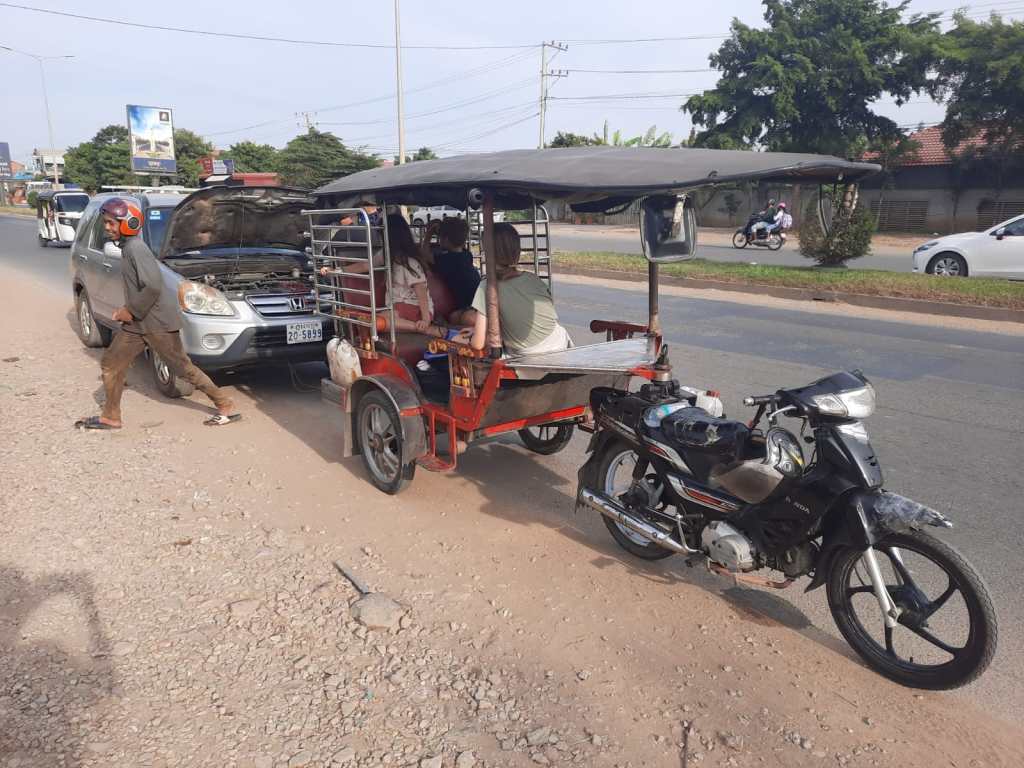
Never had my car towed by a tuk-tuk before

Returning to Cambodia, while we’ve come so far in language and culture, there is still tonnes to learn. The depth that I have been inculturated into the western society of Aussie life reveals just how much I am skimming the surface in Cambodia, even after five or six years. Whether it be the ease of using English over Khmer, through to being able to draw on numerous Australian or western cultural references that are just second nature and natural to me, versus knowing very little cultural references in Cambodia. I can’t even conceive of being able to riff off cultural depth by making up the phrase ‘We don’t need no edu-ma-cation’ (Pink Floyd and Homer mash up) in Cambodia, like I’m able to do from the West. Nevertheless, we press on with cultural observations.

In driving a car now, I am understanding Cambodian roads to a greater degree. Turning left, the equivalent of turning right in Australia, has its own rhythms. In Australia you wait for a gap and then speed across to the other side of the road. You’re picking the gap. In Cambodia you do the opposite. Instead of speeding out, generally you slowly drive forward and when you get the recognition that oncoming traffic is slowing down for you, you pull directly in front of them and then proceed to go slowly as you cross onto the side that you want to travel. You’re less picking the gap and more making the gap. This sort of slowly does it approach fits the way life is done here. You go slow at first and ten once you have made a gap you can speed up. In Australia, you just go fast from the word ‘go’.

One thing I noticed recently was I was happy for my kids to watch Aussie ads. Normally I feel like ads in Australia are a waste of time. They’re the filler between the good bits of whatever show or event I’m watching. Given the little Aussie content we get here in Cambodia, I found myself enjoying some Aussie ads with my kids. It gives us a window back into Aussie culture and society. Now, in some ways it is a fake view. But its also illuminating. Showing what Aussies love, what they want to be or have. While digging into the culture here, in some ways we lose some of our Aussie culture, or maybe just put it on hold.

Post-arrival #1: Changes to our Cambodian life

Craig being installed as an elder at the International Church

Yes COVID changed our life here in Cambodia when we arrived. But with COVID having less impact on society at present, our life here is still very different from our first term (2017-2019). In our first term we came to an unknown place with an unknown language and so our way of life was unknown and needed to be figured out, almost from scratch.

This time we returned to a known place, a known role and a language that we had begun to know. When we first arrived we were going to a Khmer church, our kids were going to a Khmer International school. Now our kids attend an international school for missionary kids and we go to an English speaking international church. When we first arrived 6 years ago, we would call a tuk-tuk driver if we wanted to go anywhere. Now we use an app, similar to Uber for tuk-tuks. When we first arrived I would go to the ATM every week to get out cash. We are not cashless yet, but now we are close to 50% cashless transactions and now have banking apps on our phones (which we didn’t have 6 years ago in Australia). When we first arrived we had to weather blackouts. Now we have a generator to assist in those times. When we first arrived, I rode a bicycle for 3 years. Now I ride a moto and can’t picture Cambodia without me using one, it’s so convenient. When we first arrived, driving was out of the question for us. Now we use a car more than we use a tuk-tuk. 

Life in Cambodia looks substantially different when you compare our first and second terms, COVID changes aside.

Pandemic arrival

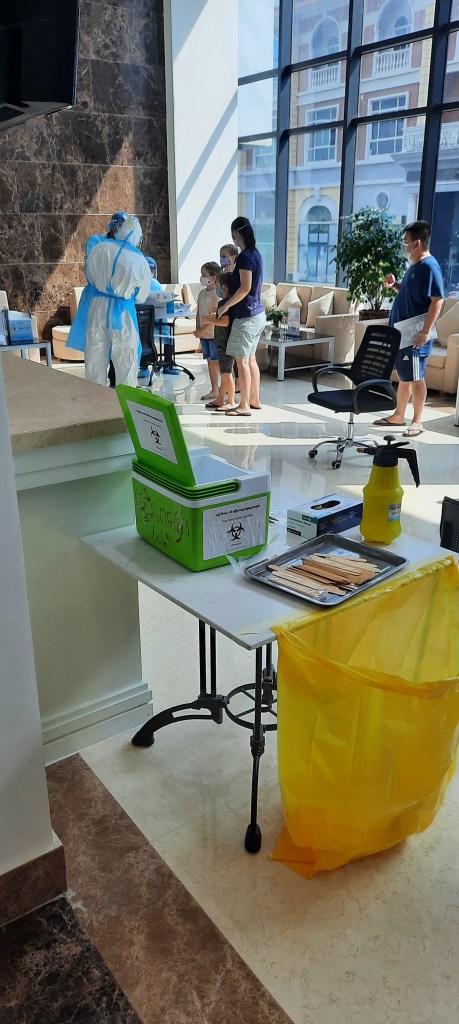
Testing so that we could leave quarantine

In my last post I summarised 17 months worth of life into 300 words concerning our extended home assignment in Australia. COVID affected both our home assignment and our return. We got our visas in February, and booked flights for April. We eventually returned to Cambodia to be greeted with COVID tests and hotel quarantine. Packing 40kgs of snacks was a vital move to help our family survive. But hotel quarantine wasn’t even our biggest challenge in returning. We returned to a city-wide lockdown and weren’t able to reconnect with friends. In our absence some friends had left and others were preparing to leave. We were returning and grieving.

Arrival also meant online-everything. Online schooling for Sam and the kids, online teaching for me and online churching for us as a family. If we had thought hotel quarantine was hard, this was harder in different ways. It was too much. After a month of trying life in Cambodia again, we as a family hit rock bottom. It was less re-entry stress and more pandemic stress. We couldn’t go on in this same fashion. We stripped everything back to the bone. With the support of CMS, our mindset was that even if we didn’t do any ministry for the year, but managed to weather this COVID storm, then our presence in Cambodia for years after would be worth this year of bunkering down and surviving.

 As 2021 progressed, week by week and as restrictions lifted, we were able to gradually add more of normal Cambodian life and ministry back into our routines. By the end of 2021 we had returned to more normal functioning in life and ministry, all while wearing masks. Though, like everyone else, we were still a bit shell-shocked.

I remember going to a hotel in mid-2021 for a quick family break and having quarantine flashbacks. Am I able to leave our room, really? In September 2022 we were able to visit Australia for a holiday. On our return to Cambodia it felt weird to be able to just walk out of the airport, rather than go through all the COVID rigmarole that our return in 2021 featured.

Life now is more Cambodia-normal.

Pre-arrival

Our home assignment in 2020 had two unexpected challenges. Home assignment is hard enough without extra challenges (that’s why we call it an assignment, it’s not a holiday). Both these challenges related to COVID and they both involved waiting. COVID made life hard in general, this included our church visits in the first half of 2020. We went from meeting in person to meeting online in a split second. Talk about whiplash. Then came the difficult news when our June flights to Cambodia were canceled.

Our first challenge was how to proceed. With the help of CMS we came to the plan of staying in Australia for the rest of 2020. This gave our family stability amongst a lot of unknowns, especially that our children could finish the academic year in Australia. We were in a season of waiting and while it was hard to wait, there was harder to come.

This harder news came at the end of 2020 in December. Our next challenge was that our visa wasn’t approved, so we had to cancel our January flights to Cambodia. That was rough. What was rougher was the unknown-ness of this second challenge. When flights were canceled the first time, we set a time to return. With visa uncertainty, would we ever get back to Cambodia? We were well aware that this has been the experience of some missionaries.

What I want to reflect on is that month of waiting and not knowing (late Dec until early Feb) was harder than the six months previously when we had set an arbitrary date to return. We were waiting and knowing. Waiting with knowledge is much easier than waiting without knowing. This is very much akin to Christian hope. We aren’t hopeful, as in whether we hope it will rain or not. We’re hopeful with more certainty. We’re certain of God’s love for us in Jesus Christ’s death and resurrection. We’re certain of Jesus’ promised return. Hope is waiting with knowing and that actually makes things easier than waiting and not knowing. 

Intro New Blog Series: Pre-arrival to Post-arrival

Image

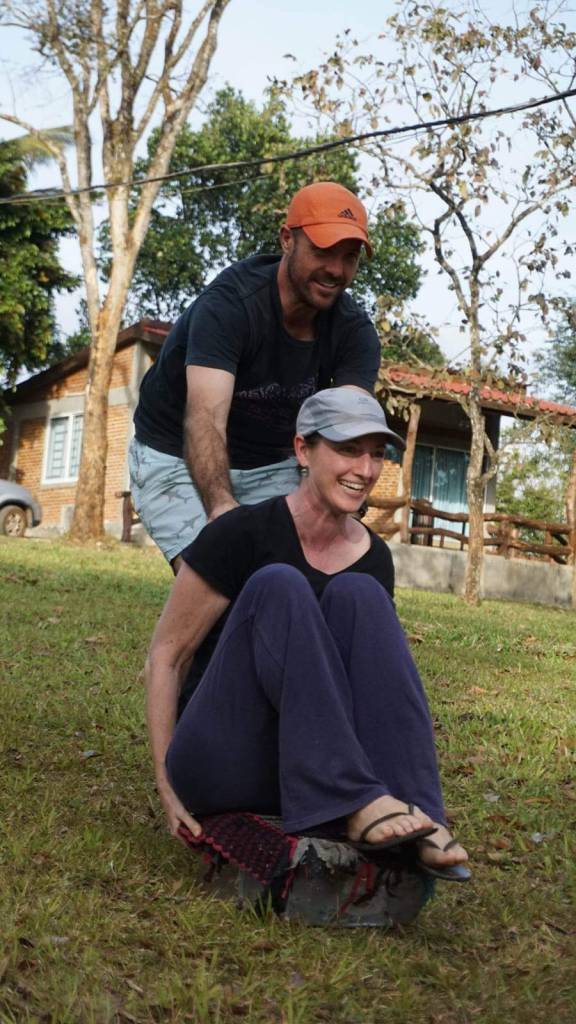
Ice-blocking down a hill at a recent holiday

It’s been a while. Apart from our latest post, the post before that was one we did from Australia in 2020, before we knew our flights would be canceled, again. So what has been happening since then? This next series catches you up, not only on some of the details of our goings-on, but also adds in new cultural and missiological insights that we’ve picked up along the way. For those who receive our monthly updates, the beginning of this series will be a helpful reminder of our journey in recent years giving good context to where we are up to as well as going into details that we can’t always fit in our monthly updates. Hope you enjoy the ride.

Digital dep #9: Missionary corona grief

This post is about our experience of being delayed in returning to Cambodia due to COVID; the confessions of a stranded missionary. Below describes the rollercoaster of feelings that we felt particularly in the heart of the pandemic lockdown earlier this year. This is not where I’m at presently, but more an insight into what I went through.

Most people during the COVID-19 pandemic this year have experienced various amounts of panic and grief. As I reflect, there is definitely overlap in what we were feeling as stranded missionaries compared with those who are permanently in Australia and probably some differences too. What stands out to me is the complexity of grief. There was the loss as plans were changed (our flights back to Cambodia in July were cancelled). There was loss of certainty (not just when would we go back to Cambodia, but could we?), loss of space (the inability to travel), loss of privacy for some (having more people stuck at home), loss of connection and loneliness (for us this was both here in Australia as well as the delay in seeing friends in Cambodia). There was also anticipatory grief (not having stable plans). There was the loss that we felt of missing things in Australia that we would have been able to do had it not been for COVID (visiting family, friends, and partner churches in person). This loss is heightened for us given we are back for a specific amount of time. Strangely, this last loss feels at odds with all those other losses. In a sense we were grieving not being able to return while simultaneously grieving in a sense of not yet ready to return as well.

What I found over this time was a wrestling backwards and forwards with these feelings of grief combined with a sense of acceptance as I worked through all this stuff. On reflection, the grief over uncertainty only really exposed an uncertainty that is always there. COVID just removed the mask of certainty that we try to create. Grief and panic is tiring. I needed to give myself and others grace. Term 3 here in Australia (July-Sept) has given us that. We’ve had a time of stability and rest.

Where am I up to now? I’m now ready to return to Cambodia.


Digital deputation series.

This time last year I didn’t think I would be starting a new blog series from Australia. We had planned to be back in Cambodia by now. COVID has changed many things for many people. As a result, we’re still in Australia. But we’re aiming at returning to Cambodia in January.

COVID also changed our time here. While we were able to visit all our partner churches, over half of our church visits were done digitally. We were flying by the seat of our pants with this digital deputation as churches were coming to terms with what church looked like in these crazy times. One week, I couldn’t have told you what Zoom was. A month later I used it almost daily.

One consequence for us is that we didn’t get to share with as many people as we would have liked about our time in Cambodia. Further, even when we did share, we didn’t have the same opportunity that you would normally have to go a bit deeper when you are face to face.

To try and remedy that lack of connection, this blog series will cover some of the things we shared about in our church visits. It will also help us consolidate our thoughts as we gear up for our second term in Cambodia early next year.

Questions please…

I used this photo from an earlier blog. 10 points if you can find the title for the previous post.

Ladies and gentlemen, lend me your questions.

We’re looking forward to catching up with many of you in person this home assignment in Australia. In order to assist us I would love it if you could share questions that you may ask us in person, prior to us meeting in person. This doesn’t mean that you can’t ask us these questions in person. But if I’ve thought about these questions and have a few answers prepared pre-conversation I’m likely to give a better answer.

My thought is also to blog a few FAQ, not to detract from being asked these in person, but so that we can go deeper together in our experience of Cambodia as we share about our time there. This is essentially a strategy to strengthen our partnership together.

Questions about anything, welcome. Questions about family life, about language, about Cambodia, about anything else related.

So without further adieu, I’ve loved to hear any questions you may have from our first term in Cambodia. Send them to me anyway; comments below, an email, facebook or other.

Fire away.

That weird missionary

Look at me! I’m not even holding my fingers the right way.

One of the things that I am looking forward to about being back in Australia is a bit of anonymity. Not that I’m going to hide away in my room the whole time (those who know this slightly-less-raging-extrovert-than-before will know this not to be the case). Nor does this relate to sharing about our time here in Cambodia with our partner churches. I’m looking forward to blending in a bit more.

Life in Cambodia means always being on display. Now, in some sense this is true anywhere. But this is a different sort of being on display. For starters, in Cambodia I often get thumbs up for riding my bike. In Australia, there is no thumbs up for riding. In fact in Sydney, quite the opposite.

Or there are the obligatory pictures of kids that are wanted just because of the colour of their skin, eyes and hair. When my family goes out we are on display. Sometimes I wish we weren’t.

Part of the recognition we receive is an encouragement. Locals give me a thumbs up for riding as a way of approval. But often the looks are either of confusion or curiosity; “Why is this westerner riding his bicycle when he has money for a car?”

Sometimes we are on display for the mistakes we make in public because we don’t know what to do in many scenarios here in Cambodia. Part of our way of combating this on-displayness has been to laugh at ourselves, particularly in our mistakes. Sam and I have coined a phrase for ourselves when we make foreigner mistakes. We mutter “stupid foreigner” under our breath to relieve some of the tension in making a mistake and standing out. Whether we have mispronounced yet another local word, or eaten the food at a restaurant the wrong way, or watched as a local just cannot get their message through to us, we are often the stupid foreigner, who has much to learn in this place. We either need to laugh or cry, so we choose to laugh.

So I am looking forward to walking or riding down the street and not being the centre of attention. I’m looking forward to having more of an idea of what to do in different situations in Australia (a culture that we know better than Cambodia, though this may not always be the case). In short, we’re craving some anonymity.