Fav Provs 28: Exposing our dark side

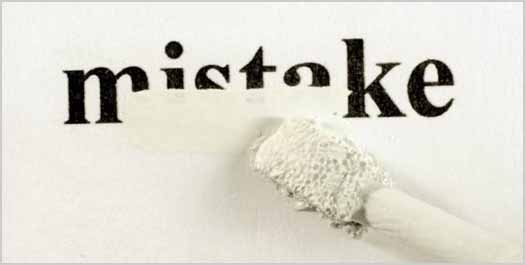
coverupmistake

Proverbs 28:13

Whoever conceals their sins does not prosper,

but the one who confesses and renounces them finds mercy.

This is not a proverb about letting our our inner-Vader.

Our impulse in life is the opposite of this proverb. We’re often (and I say often as in constantly) tempted to think that by concealing our faults and wrongs, we’ll prosper. Underlying this is the assumption that if we reveal we’ll need to pay the price of our wrongs. In other words, we think confess pay, conceal prosper.

But the reality is opposite. As this proverb in God’s Word shows us it’s not confess-pay, conceal-prosper, but confess-prosper, conceal-pay. Prosperity, in the form of mercy, follows confession.

A few quick thoughts that follow:

  1. The assumption of this proverb is that everyone sins. None is exempt.
  2. Notice its not just confess, but confess and renounce. We’re not to just say words, but to renounce (give up on, turn away from our wrongs). There are such things as cheap confessions. Confession when it is true involves renouncing – it’s not just saying the words, but meaning it in our heart.
  3. Prosperity comes in the form of mercy. Mercy is not just to be let off the hook, given a second chance. Mercy is given a much higher value than we might ordinarily give it. Mercy as we see in this proverb is a form of God’s blessing, its the way he does good to those who turn to him.



Fav Provs 28: Head or heart?

Proverbs 28:5

Evildoers do not understand what is right,

but those who seek the Lord understand it fully.

Which came first, the head or the heart? Or which has more say, head or heart? You might ‘think’ or ‘feel’ yourself to go with your head or heart more. The reality is that none of us use our head or heart alone. We use both. There are no pure facts. What we know is based on what we love. In other words, our understanding is linked to what we love, what we seek. What happens in life is that what we love will determine what we understand. It’s not enough to just know the right thing/way on its own – the bare facts as you might say. Understanding relates to what we love, what we seek.

If understanding comes from what we love, then the path to understanding is an indirect pathway. It’s not that we seek understanding and find it. Instead, we seek God and get, or get given, understanding. Understanding comes as a result or as a gift as we seek the God who does the know the right fully.

The implication that I take away from this proverb is that my understanding is dependent on God’s Word for direction. But I don’t go to God’s Word looking for understanding, on its own. I need to go to God’s Word in search of him and in that seeking him, I’ll receive understanding from him.1

headheartbalanceresize


  1. I do want to address the elephant in the room. The Proverb could be taken as meaning only Christians get knowledge and that everyone else doesn’t. I don’t take it that way. Firstly, Christians knowledge will be faulty in this present age, because of sin. No-one will understand the ‘good’ fully until Jesus returns. Secondly, there is understanding for those who don’t seek God or for those who seek a different God. But it too is always provisional. What’s the difference then if both Christians and non-Christians can’t know fully? I see it as, God’s Word provides the foundation for us to know fully. It provides the standard that I check my own understanding against. God’s Word constantly reforms my knowing as I seek God. 

Fav Provs 28: Less than ‘great expectations’

crop-failure_759

Proverbs 28:3

A ruler who oppresses the poor

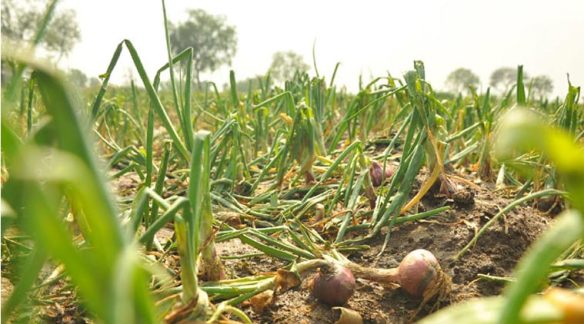
is like a driving rain that leaves no crops.

High expectations. Our society has them. I definitely have them, just ask my wife.

What is the result of our high expectations – oppression. High expectations are oppressive as we expect more out of people than they are able to give.1 The result of our high expectations is that we become slave drivers; like a driving rain on a crop. We deprive the poor, or those under us. I’m guilty of high expecations in my family and in my work.

This proverb speaks to all of us, since oppression isn’t just in the obvious forms of oppression that we might see in the actions of a dictator, or totalitarian regimes. Seeds of oppression are in all our actions, no matter how big or small. In all of our interactions in some way we are–to take the image further–all are robbing others of their fruitfulness or cropfulness.

The antidote then, and even business sense has seen this, is to make those around us great. Rather than rob, we give. This doesn’t just mean gifts or handouts, but having the right expectations of those under us. Giving them the space they need, giving them the resources or support to complete tasks we give them. The result of good expectations is that those under us thrive, rather than being left cropless. Right (or better) expectations are good for those around us. But better expectations are good for us as well, lowering anxiety and worry and and freeing us from the overworking tendencies of those high expectations to just working with what you have. The result is that right expectations are good for those under us and good for us as well; oppression not only robs the oppressed, but also the oppressor.

We won’t remove all oppression in this life, but we can work towards reducing it. We need to recognise the oppression in all our actions and repent, constantly. Then the God who is kind to us in Jesus will, by his Spirit, help us to drive away oppression, instead of driving away others. When I am kind and look out for others I enable them to bear the fruit that my oppression would have just stripped away.


  1. This is not to say that we shouldn’t have high ideals. But ideals need to be brought down into the realm of reality, working with people where they are at. 

Fav Provs 28: Fear and Confidence

Proverbs 28:1

The wicked flee though no one pursues

but the righteous are as bold as a lion.

a0c33bd0bb924453aa0879d15829b84e_man-running-2-clipart-man-cartoon-man-running-clipart_490-512

The picture of the wicked1 drew me to this proverb; a guy running away even though nobody pursues. Fear of what? Nothing. Nobody’s chasing you. It is this fear that pervades our society (in different ways) and Christians are not exempt. Thus this proverb for me is an encouragement to interrogate my fears as there will be some aspects of that fear that are right and some where I’m running away from nothing.

In light of that fear, confidence or bold-ness sets that fear in sharp relief.2 This is not presumption or arrogance, but trust and assurance. For those whose trust in Jesus, there is NOW no condemnation. That must issue out into our lives. How we move from fear of nothing to confident trust is a work of the Spirit, making us more like Christ. Jesus didn’t run away from nothing, but with boldness set his face towards Jerusalem, towards the cross.

This work of the one Spirit, in all who trust in Jesus, will be highly individual – slower for some, quicker for others, more full-er for others. There is no recipe for us to follow except, as Psalm 1 says, a constant murmuring on God’s Word amongst his people.


  1. I see ‘wicked’ as all sinful humanity, and still residing in Christians and warring against our new nature until Jesus returns. 
  2. Not only does fear of nothing pervade our culture, but so to does the boldness of the righteous. While this can often lead to arrogance, Western culture benefits from the boldness that comes from the good news. 

Series heads up: Fav Proverbs

As I settle into Cambodia, I wanted to keep blogging. But I’m not ready to blog on my experience here just yet. I’m journaling and that will provide me with fodder for a ‘first impresssions’ or ‘settling in’ series at some stage.

So, for now, I’m going to blog on some of my favourite proverbs. Two reasons, here.

to-do-list-long12I’ve been read the book monthly for a while now and so I took one of those months to jot down every proverb that stood out to me. I was thinking that I’d just pick my favourites from that list. However, my list exploded. So instead of sifting through all 95 of my favourites to find a couple, I’ve taken another tack. I found the chapter with the most proverbs that I liked in it. That chapter will form this first series. Based on how I’m going, I may do multiple favourite proverbs series.


Stay tuned next week for Proverbs 28. You could read through and try to guess which one’s will make it in the series. There were 11, so you’ve got a 1 in 3 chance of picking one of them.

Short posting break

backsoon1

You could say I’ve gone postal …

With the mission series finished, I’ll be taking a short break from blogging, into the New Year, while we prepare to and then actially move countries. I hope to start back again shortly after we arrive. 

My first series will be on Proverbs-biblical proverbs. My reasons here are firstly, I’ve been loving getting into the book of Proverbs over the last few years. Secondly, missiologically they carry great insights into culture. So as I learn how to mine the OT culture, I hope to gain skills to later doing a series on Cambodian proverbs and even Aussie proverbs at some stage.

Cya in 2017.

Mission hypothesis: Series wrap up

tsubasa-bridge

This bridge crosses the Mekong River in Cambodia.

I was talking with another missionary mate the other day, Arthur Davis. He described the missionary as a bridge between two cultures; not fully in one or the other, but connecting the two. I have found that idea immensely helpful as I think about mission and I think it sums up a lot of what this series of posts has been about. A ship may have been a more appropriate image in the past. But the context is changing. For me, the picture of missionary as a bridge works because bridges live in two places; they have two ministries (for want of a better word) just as Harries described in vulnerable mission. Bridges enable the riches of one place to be brought to another, while at the same time allowing different riches to flow in the opposite direction (assuming this is a two way bridge).

The focus on missionary as bridge also encapsulates the relational nature of mission. I came across this great quote by Meek referring to teaching but applicable for mission, “Teachers don’t teach information; they teach themselves.”1 We won’t bring goods, we’ll be bringing ourselves. This quote gets to the heart of mission as personal and relational. We will be learning personally from others, and others will be learning our person, as they receive us and we receive them. The missionary is the site of connection of two cultures, just like a bridge. May the result be for the glory of God as the connection of two cultures grows our knowledge and love of God’s Word in His Son through His Spirit.


  1.  Loving to know, p.137. 

Mission hypothesis #7b: The Reflection Cycle spinning

cambodian_roundel_retro_sunglasses-r1c9b4b1a26cb4ee9ab70f02c3a180298_zzvmp_324

There are many changes that occur in our lives that enable us to reflect and take an appropriate new action given the circumstances. These changes in us mean that we come to see God’s Word in a different way. We might see God’s fatherly patience as we move into parenthood. We might question God’s closeness during times of trouble. We might understand God’s faithfulness over the long stretch. Yet these changes occur in the same cultural pattern, they occur in the same cultural grid.

My guess as I head to Cambodia and am faced with a different culture is that my theology will change. I’m assuming I’ll start to read God’s Word in, potentially a Cambodian way. I don’t think I’ll read it as though I was fully Cambodian, but maybe with a Cambodian tinge as though I was wearing Cambodian glasses. I’m assuming it won’t happen overnight and that it will be subtle. But doing properly the reflection cycle of the last post, I’ll read God’s Word differently as I’m shaped by Cambodian culture. That’s kind of exciting; being opened up in a new way to the wonders in God’s Word.

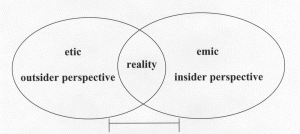
In terms of others, I hope to be able to share this same reflection cycle with those that I meet and those that I end up teaching. My role there will be as more of a counselor. I am hoping to help the students reflect on their own culture and situations and then provide an outside perspective at the right time. In research, this is called the emic (insider) and etic (outsider) perspectives. We all use outside perspectives (well… we should) when faced with a hard situation; we seek advice from a trusted friend. Hopefully, having done the reflection cycle for myself, I’ll be in the best place to help others through it for themselves.

reality

Mission hypothesis #7a: The Reflection Cycle

images

It is impossible to reflect properly about every moment that occurs. I’m not advocating constant reflection. There is plenty of time for action. But in a society of ‘activism’ has reflection disappeared?

Reflection is particularly helpful in times of trouble, or when issues arise. Going to Cambodia, I suspect this will be the case more so than usual as we learn to live in another culture different from ours. The tool I’ve found helpful (taught during my time in Melbourne), helps us navigate these tricky times. It’s not fool proof. But it’s worth it.

reflection-cycle-shortcut

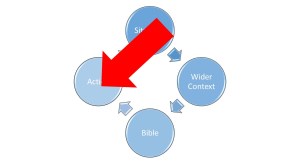
Often when faced with a new situation or problem we go straight to action. This is partly from our activist culture that works on doing things and doing them quickly; time is money. Now sometimes this is necessary and we can’t always take time to reflect. But that doesn’t mean we never should. The reflection cycle, shown to us recently at St Andrews Hall, begins with the situation or event.

reflection-cycle


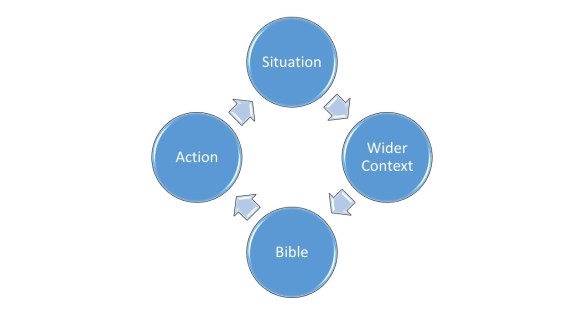
We spend time seeking to understand the ins and outs of that situation. This is important and will pay off in the rest of the cycle. We then move to the wider context (factors that may not be readily apparent, but played a part in the situation). This provides the base to head to Scripture in order to set our situation within God’s Word.1 These parts together help us then move to action, rather than moving to action straight away.2

As an example: In relationship difficulties… of which I never have any… the first step is understanding the situation as fully as we can. The second step is figuring out what lies behind the situation that may have effected things or may provide the rationale for actions and reactions (in relationships these factors are things like moods, energy levels, certain perspectives and personalities, yada, yada, yada). Having thought through these aspects, then its time to move to theological reflection. Theological reflection is only beneficial at this stage if we have done the last two stages properly.3 If we jump straight to this one, we get a similar result as if we had jumped straight to action. On the back of those three steps we are finally ready (as we can be) for action.

The real benefit in this reflection process is as much in the understanding as it is in the process. The reflection cycle does two things. Firstly, it slows us down (haste often leads to hate). And secondly, it helps us to see things from a wider perspective. Always healthy, in my opinion.

Next post, I’ll seek to apply these insights to our particular cross-cultural adventure.


  1. Here we were encouraged to go to narrative as opposed to argument. The reason being is that it is harder to pick stories prove our point of view. Instead, often narrative provides a challenge that enlarges our perspective on events or situations. 
  2. The assumption is that prayer is part of action, prayerful action
  3. Theological reflection that has skipped the first two steps will probably be reinforcing our particular reasoning for action, had we just gone straight to action. The first two steps open us up and prepare us to hear God’s Word (another, and the ultimate perspective). 

Mission hypothesis #6: The 150% missio

Who said you can’t put in more than 100% effort?

One way to describe what happens to a missionary is through percentages. That is, assuming someone living in the one society is the standard, that being 100%. What happens to a missionary is that they kind of become 150%.

Now this is less like adding 50% to the 100%, and more like becoming 75% from each culture. The reason I like this description is that it portrays both a loss and a gain that occurs as you cross cultures. You lose touch with your own culture, but gain insights into another.

So what is lost and gained?

Loses: Time with family and time with society. The way this plays out is that you miss the ‘little times’ with family, seeing them at events or together as a group. On a societal level, what you miss is the trends and events that become part of a social memory – ‘remember when…’. Missionaries return and miss that social memory.1 In a way, the individual losses of social memory are nothing significant. Some you may prefer to lose. But in another sense, people refer to things from social memory and use language arising from that memory. The result is that the missionary feels on the outside having not experienced it with everyone else.

Gains: You gain insights into another culture. In seeing another culture, you see different ways of life. As a result it can help you reflect on your own. The distance that occurs as you lose some of your culture provides that space.  So not only do you gain insights into another culture, but into your own as well; leaving your culture is a way of learning about it. Seeing a new culture and your own culture in a new way provides the opportunity to reflect, and, given enough time, it may also change your way of life. This may be permanent changes or just contextual (depending on where you are living). One of our teachers described it this way: you live one way when you’re overseas and you return to your life (more or less) when you come back.

On coming back, the missionary looks mostly the same. But because of their cross cultural experiences and lost home experiences (the 25% lost of your home culture) they’ll be different, even if it doesn’t show.

different_inside_by_kremo


  1. I guess this is slightly diminished by online communication to a degree. Although seeing a few things at distance is no compensation for living there.