Settling in: #6. Ambiguity tolerance

20170406_080334

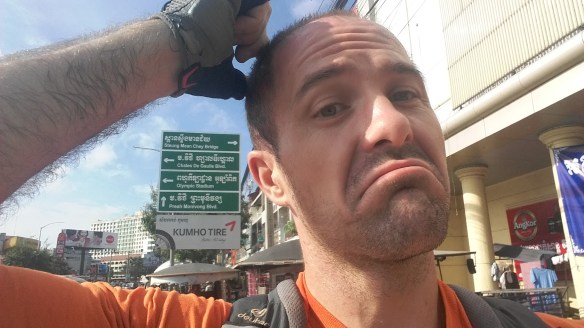
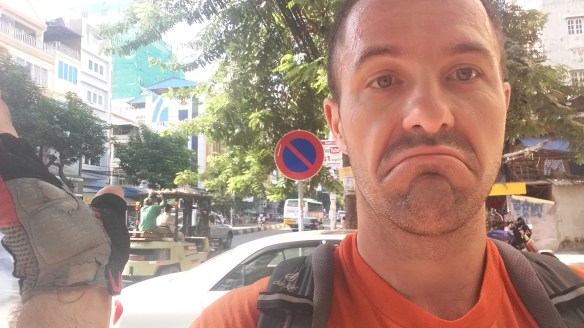
What does this sign mean? I have no idea, despite using the road everyday. This is me exercising some ambiguity tolerance. (BTW my confused face looks a lot like my undecided face)

I remember hearing the phrase “ambiguity tolerance” in training down in Melbourne. Then, on the first day of language class here in Cambodia, our teacher shared that good language learners are those who have ambiguity tolerance (or who work on having good ambiguity tolerance). That is, there’s much that we don’t know. But if we stop to try to understand every single detail before acting–or speaking, in the case of language learning–then we won’t get very far without being constantly frustrated.

I think what this looks like in a new culture is that we’re acting or speaking without knowing the full extent of what we are doing or saying. For example, in just using our favourite and usual tuktuk driver are we being loyal to him or showing an unhealthy favouritism in a collective culture? We’re just never really sure what our actions are saying or the effect they are having on others.

Now, this is actually how we ALL live, all the time, whether overseas or not. But this fact is highlighted more in a place where you know very little about the culture. Sometimes I do well at tolerating ambiguity. At these times, ambiguity tolerance enables me to relax, given I’m not going to have all the info I need before making decisions. At other times, the ambiguity is harder to deal with. Here’s one example:

My tuktuk driver said something to me and I had no idea what he said. He’d been driving us most places, most days for close to a month. We were seeing each other a lot; some days I would be in the tuktuk for 3 hours. I had started speaking in very poor beginner Khmer to him. He often said things to me that I didn’t understand, but I usually nod to be polite (a fairly usual pattern for us here in Cambodia). This particular day was a Friday and I didn’t think too much of it.

Anyway, the following Monday, one of his tuktuk driver friends showed up instead of him. I thought, ‘he must have just wanted a day off or had something to do’. A few days went by and the friend kept coming, not our usual tuktuk driver. I started to wonder whether he’d told me something important on that Friday. Was he displeased with us? Were we paying him enough? Was he going to come back? Did we have conflict I was unaware of? I wasn’t being tolerant to this ambiguity, and it was affecting my tolerance in other areas of life here.

I didn’t realise how much the ambiguity was affecting me until the 4th day when the tuktuk driver was late coming to pick us up. I started to hope. My regular tuktuk driver was often late, but his friend was always early. When I heard the tuktuk driver come down the street late, I was hoping it would be him (one of those times when you’re happy someone is late). And it was. My friend was back! I was so happy. I was happy because he was back. But I was also happy because the ambiguity of that situation was resolved. Unfortunately I couldn’t really tell him why I was happy.

This is just a small example of ambiguity tolerance. But this is one of the main ongoing lessons of living here so far. To survive in a new place, I’ll need to grow my ambiguity tolerance.
Settling in: #5. Growing familiarity

20170325_112819

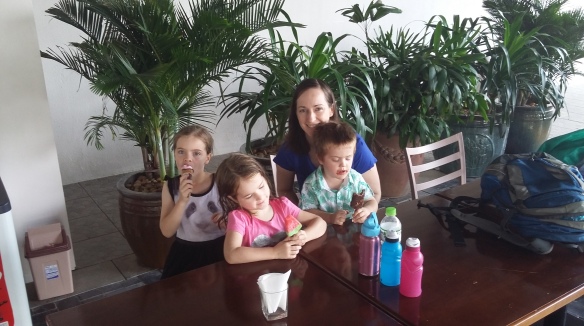
Our very ‘familiar’ family time is at a hotel that has a pool and cafe for treats.

Even in a short time it’s amazing how a foreign place can start to feel familiar. The school run, though only doing it for a few months, feels very familiar. Our route to language school also feels very familiar. The Khmer meals that our house helper cooks are less new and different and there are now some meals that we get very excited about when she is making them. And we’ve gotten used to living in our Cambodian house; each week it feels more and more like home.

This was brought home (hehe) to me a couple of weeks back. We managed to get out of Phnom Penh for the first time since we arrived in January. We couldn’t have done it without our good friends (locals) who helped us experience some more of Cambodia. But it was on the return trip that something struck me: We were returning ‘home’ to something familiar; familiar house and routine. We were coming home. There was a new sense in that word having left Phnom Penh for the first time and then return.

There’s still more to do and get used to in the house. There’s still much more to explore in Phnom Penh and much more to see in the countryside. Yet, its surprising how the different moves to familiar. With familiarity comes a joy and relaxedness. The stress hormones get a slight break and you’re able to function in a different way. In this sense, there’s not just joy in the new, but joy in the not-so-new as we settle into patterns and friendships that have enough history to make us feel like we’re not at square one. Things go from new to the new normal.

Settling in: #4. Don’t compare

20170405_122225

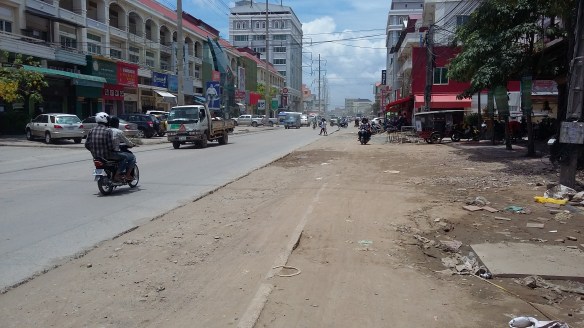
A major-ish road in Phnom Penh with a large shoulder. I love riding a mountain bike down that shoulder.

There are two dangerous comparisons that I musn’t make living overseas. The first is don’t compare the new country with the one back home. Instead, live each country as its own entity rather than wishing one was more like the other.  Thoughts like “I wish Cambodia was more like Australia” are not helpful. Comparison is a slippery slope towards resentment and burnout.

Of course it’s okay to compare. I just need to think about why I’m comparing and in what spirit I’m making the comparison–less grass is greener comparison and more healthy respect for both places. So comparing, when contented, is healthy and normal and even helpful. But if I’m tired or stressed or not going well in the new place, then I should not compare. At these times I just need to let each place be what it is.

For example, I could look at the above road and wish the roads were more like Australia, where the roads are paved right to the edges. That’s the sort of comparison I shouldn’t make. A more healthy comparison is to see that the upshot of these roads however, is that when they are packed with traffic, and I’m riding my mountain bike along the side, guess who slips straight past the traffic (even past all those tuktuks and motos)?

The second comparison that I shouldn’t make is with other missios or expats (people from other countries). The reality is that every single expat is from a different place and is here for a different reason and a different length of time. These multiple differences will affect all the choices they make and will mean those choices differ from mine with varying degrees. Comparison is helpful when you are aware that there is going to be a healthy and normal difference–where we are all just trying to make decisions in light of our own background, circumstances and purposes.

This comparison thingy is also particularly evident in language learning. I often need to tell myself “DON’T DO IT. DON’T COMPARE. GO AT YOUR OWN PACE.”

I suspect I’ll need to remind myself not to compare for many years to come.

Settling in: #3. Decisions galore

20170406_080900

A major intersection near where I study. Which way should I go? Decisions, decisions.

Yes, there’s choice paralysis in Australia too. But there is a new stress to making choices in a new country. As you settle-in in a new country you’re constantly having to make all these decisions about how you’ll live; not only where you’ll live, but how you’ll set up your house. Do you set it up to be friendly to local friends or as a sanctuary for the family? What should you do about transportation? A car may be cheaper and safer, but are they the only criteria?

For those who don’t mind what others think, these decisions don’t have as much weight. But for those who do consider what others will think, this is one of the harder things about moving to a new country. You’re never sure what impact the choices you make will have on others. You have more certainty in the country you’re from as you know the culture and how people think. But in a new country, you have mostly no idea how people are going to interpret what you do.

Added to this is that you not only have the local community to keep in mind, but you have a international community (expats) to keep in mind. Expats can be a source of help as you settle in. But here’s the catch. Each person/family has come from a different place, with different backgrounds and different experiences, with different purposes and length of stay in this new country. The range of choices people make are from one end of the spectrum to the other. This means that you’re having to sift through every bit of advice and try and interpret it for yourself.

In the beginning there are many decisions to be made. Eventually, the number of decisions to be made slows down. But you are very aware of each new decision that you make, and begin to deal with the unseen consequences of earlier choices. Again, in some way this isn’t much different from doing life in your own country. But settling-in in a new country means you’re making a lot of these choices all at once and you’re doing it with less cultural awareness. So, in short, a condensed period of decision making brings to the fore the act of making decisions.

Settling in: #2. The joy of early wins

20170405_183004

My first wet night ride. Notice my poncho goes into my helmet; thongs/flip flops as essential wet weather footwear (essential footwear in heat as well); and the trail of water behind my bike–the water was easily 20cm deep on our street. Not even wet season yet. Oh yeah, that’s two pieces of trash floating along right there.

Who’d have ever thought riding at night in the rain in ankle deep water was a kick? Such is the joy of settling into a new place. Simple things can give you such great joy.

Have you ever started a new sport or hobby before? One of the joys of starting that sport or hobby is that in the early days you see lots of improvement. You make what seems like big wins.

I was a regular bike rider in Australia – both for recreation and transport. I loved it. But riding in a new place is a joy, an early win in a different way. Riding, to explore and have some independence in a place where you rely on others for transport–win. Riding, after your first fall (with minor cuts and scrapes) in a new country–win. Riding in the wet at night, not just in sprinkles, but in water almost up to your pedals–WIN.

After you’ve been playing or hobbying for a while, those early wins diminish slightly. But in the early days, they’re more regular, more visible and more joyful.

The joy of settling into a new country includes getting good at living in that new country. Completing simple tasks provides easy wins, like learning how to buy food, learning how to get around (particularly without a car or obvious form of transport), learning how to pay bills, or setting up a bank account. All these things come with a sense of satisfaction that you might not have in a country where you are able to do more things. In the context of very obvious inabilities (settling into a new country), growing abilities provide a great source of joy. Bring on the early wins!

Settling in: #1. Newness tiredness

20170427_153051

We’re being very ‘Cambodian’ in combating our newness tiredness.

Overseas tiredness is different from tiredness in your own country. While being too busy is present in both, there is one major difference; as you settle into a new country everything is new.

In your own country there’s a mix of new and old. Often the old is easy to do–we do it without thinking about it. How many people driving in Sydney for 10 years get stressed by ‘the scariness of driving in Sydney.’1

In a new country, everything is new, nothing is old. Which means everything is hard work. Even the little things that you wouldn’t think about as hard, are tiring. One example is shopping. Where do you go to get food? You can’t get it all in one place. There is often one place for one thing and another place for the next thing. None of this is one stop shop; more like one thing per shop. It hurts your head just trying to figure these simple things out. So overseas tiredness could be better termed ‘newness tiredness’.2 Gradually things change. But in the beginning you’re hit with all the new.

We were told in training, ‘expect to sleep 2 hours extra each night overseas just to get by on the day to day.’ We’ve certainly experienced that. But Sam and I also employed two other strategies to combat newness tiredness (at least we did in the early days). Our first strategy was to just aim to do one thing per day. If you get more than that done, you’ve done well… but maybe too well (you’ll pay for it tomorrow). So really it’s ‘well done’ if only the one thing gets done.

Our other strategy is to think long term. We have the privilege of being here long term, which means we don’t have to try and cram everything in all at once. The result of this is that going slow is not only doable but will enable us to stay long term.

This newness tiredness doesn’t disappear overnight. Even after you’ve ‘settled in’ there’s still more ‘new’. In that sense, the newness tiredness hangs around indefinitely.


  1. There may be other reasons for why you are stressed while driving in Sydney. 
  2. Not only are you physically and intellectually tired, but you’re emotionally drained. Your senses are pumped full with new. Your values take a hit as you get used to a new culture and new way of living with different goals and values inherent in their way of doing. 

New Series heads up: Settling in over first impressions

20170416_092520

The Wat near our house. It encapsulates the feeling of this post, BELOW.

‘First impressions’ or ‘Settling in’. I’ve had these two taglines rummaging around in my brain, peering at me from my notes when I make observations about myself or about Cambodia. Since before we arrived in Cambodia I’ve been hoping to do a series that gives you a sense of how it’s been for us in these early days. I kept coming back to these two phrases, again and again.

The more that I observed and reflected, the more these two phrases separated in my thinking. Early on they’d almost been synonymous. But as we’ve ‘settled in’ (so far) over these last three months they’ve taken on different meanings. This separation helps to explain where I’m currently at.

I wanted to give you a taste of what Cambodia is like for us, through our new eyes. But I don’t think I’m quite there yet. The more I reflect on our life here, the more I am able to talk about what we were experiencing. Yet at the same time I also feel less able to speak confidently about Cambodia. Not because I don’t like it here, but more because I want to give time to my observations and reflect some more before I make some of them public.1 The Wat (think temple, i.e., Angkor Wat; pictured on the flag above) near our house provides an apt illustration. We’re used to the Wat, we’re settled. However, I don’t feel I could really say much that is helpful about it, just yet. I hope to soon.

So… I feel I’m able to speak about our experience and how we’re going–settling in–in a way that has clarity and is hopefully helpful. Thus, I lean closer to the term ‘settling in’. ‘First impressions’ seems to require more local knowledge than I have yet to do it well; context sensitive.

So this first series will be about our settling in. There will be glimpses of Cambodia in this series, but mostly it will be about our experience in a new culture. In that sense, the learning will be more general than specific to Cambodia. Although I’m sure it’ll have a Cambodian flavour. So in this series you’ll hopefully get a sense of what it’s been like for us so far – some of the joys and challenges as we’ve settled in to Cambodia.


  1.  The proverb that has been running around in my head is ‘In a lawsuit the first to speak seems right, until someone comes forward and cross-examines.’ (Prov 18:17) Not that I feel I’ll be cross examined for what I say by others. This is more just a cross examining from my later ‘me’ (which is bound to happen anyway). 

Mission hypothesis: Series wrap up

tsubasa-bridge

This bridge crosses the Mekong River in Cambodia.

I was talking with another missionary mate the other day, Arthur Davis. He described the missionary as a bridge between two cultures; not fully in one or the other, but connecting the two. I have found that idea immensely helpful as I think about mission and I think it sums up a lot of what this series of posts has been about. A ship may have been a more appropriate image in the past. But the context is changing. For me, the picture of missionary as a bridge works because bridges live in two places; they have two ministries (for want of a better word) just as Harries described in vulnerable mission. Bridges enable the riches of one place to be brought to another, while at the same time allowing different riches to flow in the opposite direction (assuming this is a two way bridge).

The focus on missionary as bridge also encapsulates the relational nature of mission. I came across this great quote by Meek referring to teaching but applicable for mission, “Teachers don’t teach information; they teach themselves.”1 We won’t bring goods, we’ll be bringing ourselves. This quote gets to the heart of mission as personal and relational. We will be learning personally from others, and others will be learning our person, as they receive us and we receive them. The missionary is the site of connection of two cultures, just like a bridge. May the result be for the glory of God as the connection of two cultures grows our knowledge and love of God’s Word in His Son through His Spirit.


  1.  Loving to know, p.137. 

Mission hypothesis #7b: The Reflection Cycle spinning

cambodian_roundel_retro_sunglasses-r1c9b4b1a26cb4ee9ab70f02c3a180298_zzvmp_324

There are many changes that occur in our lives that enable us to reflect and take an appropriate new action given the circumstances. These changes in us mean that we come to see God’s Word in a different way. We might see God’s fatherly patience as we move into parenthood. We might question God’s closeness during times of trouble. We might understand God’s faithfulness over the long stretch. Yet these changes occur in the same cultural pattern, they occur in the same cultural grid.

My guess as I head to Cambodia and am faced with a different culture is that my theology will change. I’m assuming I’ll start to read God’s Word in, potentially a Cambodian way. I don’t think I’ll read it as though I was fully Cambodian, but maybe with a Cambodian tinge as though I was wearing Cambodian glasses. I’m assuming it won’t happen overnight and that it will be subtle. But doing properly the reflection cycle of the last post, I’ll read God’s Word differently as I’m shaped by Cambodian culture. That’s kind of exciting; being opened up in a new way to the wonders in God’s Word.

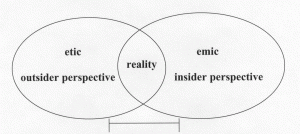
In terms of others, I hope to be able to share this same reflection cycle with those that I meet and those that I end up teaching. My role there will be as more of a counselor. I am hoping to help the students reflect on their own culture and situations and then provide an outside perspective at the right time. In research, this is called the emic (insider) and etic (outsider) perspectives. We all use outside perspectives (well… we should) when faced with a hard situation; we seek advice from a trusted friend. Hopefully, having done the reflection cycle for myself, I’ll be in the best place to help others through it for themselves.

reality

Mission hypothesis #7a: The Reflection Cycle

images

It is impossible to reflect properly about every moment that occurs. I’m not advocating constant reflection. There is plenty of time for action. But in a society of ‘activism’ has reflection disappeared?

Reflection is particularly helpful in times of trouble, or when issues arise. Going to Cambodia, I suspect this will be the case more so than usual as we learn to live in another culture different from ours. The tool I’ve found helpful (taught during my time in Melbourne), helps us navigate these tricky times. It’s not fool proof. But it’s worth it.

reflection-cycle-shortcut

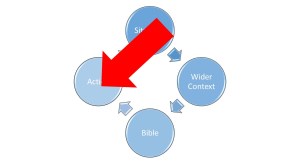
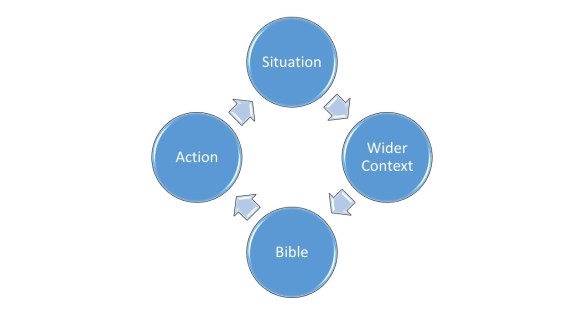
Often when faced with a new situation or problem we go straight to action. This is partly from our activist culture that works on doing things and doing them quickly; time is money. Now sometimes this is necessary and we can’t always take time to reflect. But that doesn’t mean we never should. The reflection cycle, shown to us recently at St Andrews Hall, begins with the situation or event.

reflection-cycle


We spend time seeking to understand the ins and outs of that situation. This is important and will pay off in the rest of the cycle. We then move to the wider context (factors that may not be readily apparent, but played a part in the situation). This provides the base to head to Scripture in order to set our situation within God’s Word.1 These parts together help us then move to action, rather than moving to action straight away.2

As an example: In relationship difficulties… of which I never have any… the first step is understanding the situation as fully as we can. The second step is figuring out what lies behind the situation that may have effected things or may provide the rationale for actions and reactions (in relationships these factors are things like moods, energy levels, certain perspectives and personalities, yada, yada, yada). Having thought through these aspects, then its time to move to theological reflection. Theological reflection is only beneficial at this stage if we have done the last two stages properly.3 If we jump straight to this one, we get a similar result as if we had jumped straight to action. On the back of those three steps we are finally ready (as we can be) for action.

The real benefit in this reflection process is as much in the understanding as it is in the process. The reflection cycle does two things. Firstly, it slows us down (haste often leads to hate). And secondly, it helps us to see things from a wider perspective. Always healthy, in my opinion.

Next post, I’ll seek to apply these insights to our particular cross-cultural adventure.


  1. Here we were encouraged to go to narrative as opposed to argument. The reason being is that it is harder to pick stories prove our point of view. Instead, often narrative provides a challenge that enlarges our perspective on events or situations. 
  2. The assumption is that prayer is part of action, prayerful action
  3. Theological reflection that has skipped the first two steps will probably be reinforcing our particular reasoning for action, had we just gone straight to action. The first two steps open us up and prepare us to hear God’s Word (another, and the ultimate perspective).