Digital dep #5: What did we miss the most?

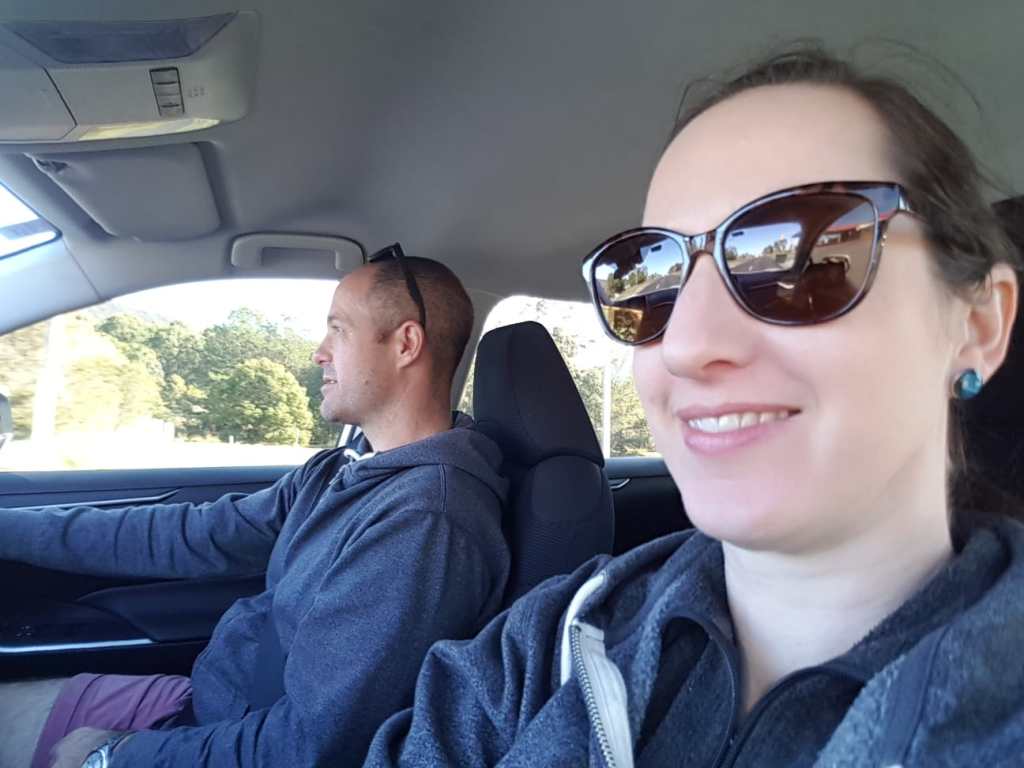
Two out of three: driving and wearing a hoodie. Hard to show communicating with ease in a pic.

When we were living in Cambodia, what did we miss the most from Australia? Of course family and friends is what we missed the most. Close to this was the beauty of Australia. But on a more trivial nature I missed the cold. I joke that in my time back in Australia I’m going to freeze my body temp to 10 degrees Celsius and then spend the next term in Cambodia thawing in the humidity. Though I don’t think the freezing would last that long. I missed the cold so much, I wrote a poem about it.

I also missed driving. We weren’t ready to drive in Cambodia when we first arrived. But having driven for almost 20 years, it was a skill that I missed every now and then. The other thing I missed I never would have thought I would miss until I did. That is communicating with ease. Learning a new language is hard. Using that new language is hard. I did improve in the three years that we were there. And yet still, communicating takes so much work and is fraught with so many issues. Now of course we have issues with communicating in our own language all the time. There are frequent miscommunications. But there are a bunch of interactions that are just simple and easy. Hello! How are you? Can I please have ….? (when at a store). Imagine those simple interactions being hard. They were. Or to order something and not be sure what will come out. One time I tried to order 3 eggs, and 9 eggs came out. Some friends affectionately call me ‘Craigy nine eggs’ now as a result. When even simple conversations are tricky, you miss communicating with ease. This is even without going into all the shared culture that you have with people from your home culture as I spoke about last post.
Digital dep #4: Two revelations on korruptshun

I tossed up as to whether to write this post, mostly because I wanted to watch what I say on this public forum. So I’m going to talk more generally about the topic. The two revelations that I share in no way should be taken as my support of korruptshun, nor do they diminish the horror that korruptshun creates. They are more me understanding more fully this phenomenon. As an aside, I’ve decided not to write the full word, not because I’m worried, but better safer than sorry. I’m sure a sophisticated search could find this post (not that there is anything really controversial in what I’m saying here). BTW if you’re still confused by my misspelled topic for today, try saying it aloud, it’s spelt phonetically.

My first revelation is that I think there is a grey area in relation to korruptshun than I had previously thought. Say I have to get some documents through an agency. To speed it along I give more than the expected amount. In this sense those with money are treated ‘better’ than those ‘without’. Before, if I had come across this scenario I would have called this an example of korruptshun. And I still might. My thoughts are still being worked out on this topic. But two things that I now know that make it more complicated than the simple example I just gave. The first complicating factor is in relation to a similar practice in Australia. If I want a package to be delivered faster, I pay more than the usual amount. It’s called the ‘express’ rate. And so again, those with money are treated ‘better’ than those without. Now this we all accept and just call fast tracking. And the fact that it is standardised and transparent does eliminate some of the greyness surrounding this topic. The second complicating factor is that in Australia so many of our processes occur outside of relationship. Think of how many things we can do without interacting with people. I can order a product, have it delivered and not have any contact with any person in that transaction. While this is a fringe example, it’s still possible. Contrast that impersonal transaction with the relational nature of Cambodian life. Nearly everything is done in the context of relationships. And we all know that relationships are messy. They are not clinical like a formal procedure. And this helps me to see some more of the grey area in relation to korruptshun. Further, understanding the relational nature of life in Cambodia makes more sense of the bargaining that we see happen and that I fail miserably at.

My second revelation is much briefer. When we think about korruptshun and poverty, we often see that the two go together. I think my first reaction is to say that korruptshun creates poverty. And I think there is truth to that. And yet I think the converse is also true as well, and I don’t often think of it in this way. That is, korruptshun arises in conditions of poverty. Proverbs 30 has a saying-slash-prayer where sage asks for neither opulence or poverty and the reason for not wanting poverty is that as a result he will steal. Again, this doesn’t remove the responsibility we have in each of our circumstances (including poverty). But it does highlight a valuable point: poverty creates korruptshun, just as korruptshun creates poverty.

My thoughts are still evolving on this topic. Would love to hear what you think, both on where you think I’ve missed it or on thoughts that came to you from reading this.

Digital dep #3: Culture as sharing

Do you know what that hand hold represents? I didn’t even get the hold right, let alone the meaning.

This is not the first time I’ve got this hand hold wrong. I think I have photographic evidence another time as well. Do you know what it stands for? Its not the standard V shape that you make with your 2nd and 3rd finger. Its not a symbol for money like I originally thought it was (and like my hand hold assumes). It is, as far as I know, a symbol for love: a heart. Contextually, it makes sense: a wedding.

I don’t think I realised how little culture I knew til I was back in a culture I knew well. Granted, I knew that it would take years to learn some culture and I’d still be only scratching the surface. But you don’t realise the storehouse of culture that we imbibe from our home culture. Decades of exposure, compared to a shallow immersion in Khmer culture.

In my home country I understand clothing trends: jean styles moving from bell-bottoms to bleached to straight to tight to so-ripped-there-is-barely-any-jean-material-left. I’m not even a fashion expert, and I know that basic transition. I would have no idea of the current clothing trends in Cambodia or where they have been or where they are going in Cambodia. I feel the lack of culture even more in relation to movies and songs. Being back in Australia and being able to reference lines from movies we share in common like “I’ll be back” or “How’s the serenity” without a strange look of “What did you just say?” Or being able to start a line and not need to finish it, like, “From little things ….”

Does this make me feel despondent, the shallow nature of my cultural understanding in Cambodia? Nah. Does that mean I just feel like giving up? Nah. Two things. I appreciate more my Australian culture and the depth that I have there. And I look forward to days, not when I can know all the cultural references made in a conversation down to the last proverb, but when I can share some of them with my Cambodian friends. The beauty of sharing a joke together. It seems to me that culture is a form of sharing.

Digital dep #2: Being there distantly.

Warning: This is a more abstract reflection on being a missionary

Before leaving for Cambodia I did a brief seminar on my thoughts on immersion and connection as a missionary as a sort of thought experiment of what it would be like to be a missionary in a new place, seeking to get to know (immersion) while also being known in another place (connection). Towards the end of my first 3 year term in Cambodia I wrote a post summing up my thoughts in this regard.

One of the surprises of first term was where we ended up on my made-up immersion/connection spectrum. In short: not as immersed as I thought. Now, as I reflect on that, I can see lots of reasons why. The main reason is captured in the missiology language of insider and outsider. I think the goal is to move towards being like an insider in a new culture (for us, Cambodia). What’s interesting is how far you can actually move towards being an insider. Of course, you can never be a true insider of a new culture, even if you’ve been there for yonks. There will always be a sort of distance.

But I don’t think that distance is wrong. In fact, in some ways, its necessary. One of the necessities of mission (exemplified in the CMS model of mission) is that we do it in partnership. We are sent. We are not lone rangers. We are part of a fellowship. That requires communication or connection. As you communicate, what you have to do is step back from experiencing in order to observe and document and describe. That distance is necessary in communicating with others, but it changes your stance toward the new culture. Again, not that distance is bad. We don’t say that a doctor should not have distance when they treat patients. In fact, some distance is necessary to be a good doctor. A good teacher has distance as they have to be able to see the whole in order to rightly teach the next step. Mission today requires more partner experience. We see this in the nature of mission communication. Not only is it prayer points that should be sent monthly, but videos, pictures, media that enables or assists partners, in some way, experiencing what the missionary experiences. In this sort of partnership model, there is a movement from the immersion of the missionary to the immersion of the partner.

This is where my thoughts on the missionary as bridge seem to really resonate.

Love to hear your thoughts on this: parts that you agree or disagree with.

Digital dep #1: Least prepared for?

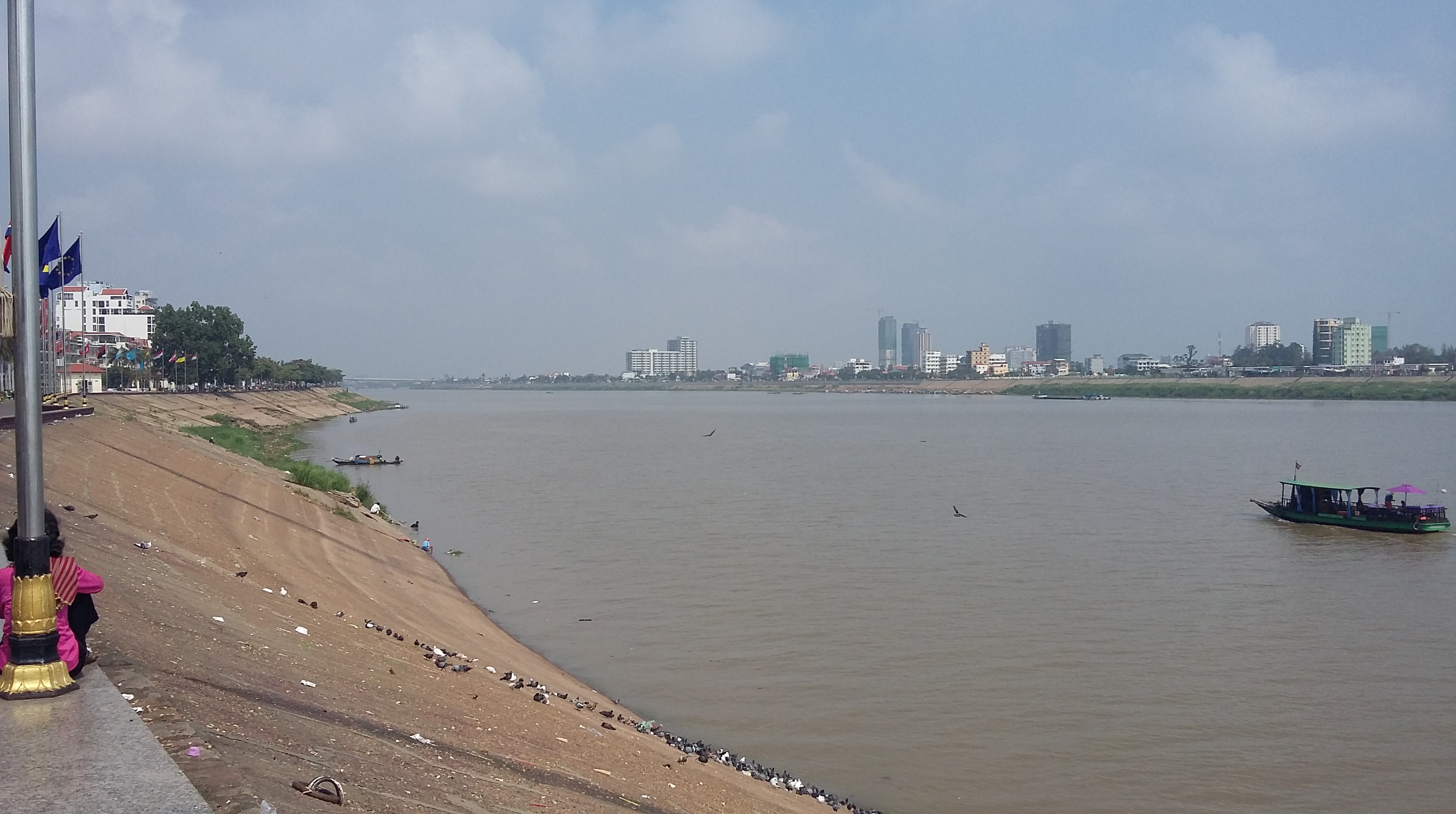
The riverside that is prime location for potential beauty and a fairly major road

As I think back to arriving in Cambodia, the thing that I was least prepared for was the dirtiness of the place. I was ready for the stifling heat even though I didn’t know how much it would sap you. I was ready for grind of language learning despite not fully realising how slow it would be. I don’t think I was prepared for the dirt. I knew it wouldn’t be a clean place, like more developed countries. But I was thinking it would be more like what rural Cambodia is currently. That is, mostly natural vegetation and beauty. And even though I’d been to cities in Asia before, the dirtiness of the place still caught me off guard the most. Don’t get me wrong, Cambodia is a beautiful place. Phnom Penh, the capital of Cambodia, is not. A close second to the surprise of dirt is the amount of rubbish that you find dumped everywhere.

I first saw the dirt when flying over the airport as we were about to land for the first time. We then experienced the dirt first hand when our house needed to be mopped twice daily just to stay clean. And we are not clean freaks. In Australia we mop much, much, much less. What I found intriguing on my bike rides to class was the shop owners watering the road just outside their house. I haven’t checked this, but I assume it’s to dampen the dirt so less dust comes into their shop.

I rode my bicycle every day in Cambodia. What this meant for me is that for the three years I rode a mountain bike. The quality of the roads goes hand in hand with the dirtiness and so rather than switching to a road or racing bike in the city, I ride mountain bike because there is still a need for it on many of the roads I ride on.

On reflection after our first term, the other thing that I least expected was how much language you can pick up. I thought that to be good at language meant being immersed in the culture and community; going to a local church, local school and living amongst locals. What surprised me is that we didn’t do this as much as we thought and yet I was able to make significant gains. This is partly because CMS frees us up to really learn language in the first term. But my thought had been that we would need to be ultra immersed. And true, that would help. But immersion in the way I thought it is not the be all and end all. In fact, the more I think about it, it was because we weren’t as immersed as I thought that enabled me to do as much language as I did.

Our video captures this aspect of surprise from our first term.